Decline in Traditional and Social Media: What’s a PR Person to Do?

The news for traditional news media outlets continues to get worse. According to U.S. Labor Department data, jobs in the newspaper sector have declined nearly 60% since 1990. That is a staggering statistic, especially when one considers how the local paper used to be a routine part of everyday life.

Magazines lost 36 percent of their jobs during the same period, with radio employment down 27%.

Internet broadcasting and publishing employment, on the other hand, has grown from about 30,000 to nearly 198,000, according to data from the Bureau of Labor Statistics data.

None of this is terribly surprising, given that these trends have been going on for some time now. But what’s noteworthy is that a new study involving nine countries found that people are spending less time on social media apps.

Instagram and Twitter were both down nearly 24%; Snapchat use declined by about 16%; and Facebook by 8%. In the U.S., only Facebook fared better (though slightly)—it was down only 6.7% here.

News media outlets are declining, and so is the use of social media. What are the implications for public relations? Some perspective may be helpful.

Down Arrow for Trad & Soc Media Decline Post

First, people are not communicating less, but rather in different ways.

Texting, for example, likely accounts for some of the drop in social media usage. Plus, new mobile apps are constantly being created, giving users additional options for making connections in new ways.

Second, while people aren’t reading newspapers and magazines like they used to, the exponential growth in Internet broadcasting and publishing jobs demonstrates that they are still interested in news and features, it’s just that many are getting them online.

As I noted in a July 2015 post, social media has become an essential part of journalistic practice, with 94% of journalists saying they use it daily, primarily to find sources and network. That percentage is probably even higher today. So, while use of social media apps may be down among general users, it’s still an important for organizations and individuals to be “discoverable” for journalists seeking sources.

Social media will remain an important way for companies and agencies to interact with customers and prospects, even if some of the apps used to reach them evolve.

Finding new ways to communication is the new norm for PR professionals. Knowing your audiences, and how they prefer to receive information and communicate with you, is vital to PR success, as is staying on top of trends.

There will always be an audience for people with expertise in a particular niche who are willing to share helpful information and tips, regardless of the medium used. And in spite of all the changes taking place in media, getting the right message to the right person at the right time is still the best path to PR success.

photo credit: Going down. via photopin (license)


Ad Agencies: Divide Critics into Two Groups for PR Success

Whenever your agency represents a company that has even a hint of controversy attached to it, you can be sure that critics are just around the corner waiting to pounce. Or, maybe the company is hiring your agency because critics have already declared a full-scale war, and it needs help fending off attacks.

Sometimes even a handful of vocal and motivated critics can give companies a headache, especially if they are adept at using social media and know how make themselves appear to be greater in number than they really are.

Early in my public relations career, I attended a seminar where the vice president of corporate communications for a company that routinely was the target of critics discussed how he handled his job in such an environment. He explained that he divided the company’s critics into two groups: the reasonable and the unreasonable.

“Critics are our friends, they show us our faults.”
― Benjamin Franklin

The reasonable critics are people who have legitimate concerns and make constructive criticism in an effort to bring about improvement. These are individuals an organization can and should work with whenever possible. Sometimes, reasonable critics can even be won over to become allies. They can make us better if we listen to them and work with them to find common ground and win-win solutions.

“To avoid criticism say nothing, do nothing, be nothing.”
― Elbert Hubbard

The unreasonable critics are never going to be happy, no matter what you do.  They will be suspicious of your motives if you try to work with them, and any action you take will be found to be deficient in some way. Regardless of what they might say, they have no interest in having a dialogue about the issues and working with you. In their eyes, the company is Darth Vader in corporate form. These critics thrive on attention and the thrill of the battle.

You can waste a lot of time and energy dealing with unreasonable critics, and at the end of the day nothing will have changed. Plus, by trying to dialogue with them, you risk elevating their profile and giving them more credibility than they deserve. This is especially true in the age of social media, where critics can be relentless and exceedingly nasty online. They tie up company time and resources with endless debates and accusations, and no matter what you say or do, they’ll still hate your client or cause.

What to do with unreasonable critics? I suggest an initial response to a complaint or inquiry, especially if it is made through social media where anyone online can see what is being said. Being unresponsive makes a company look bad and uncaring, but at the same time there are advocacy groups and bloggers who relish yanking corporate chains and putting companies in a spin.

Part of the challenge of dealing with critics is not knowing whether a first-time complainer belongs in the reasonable or unreasonable camp.

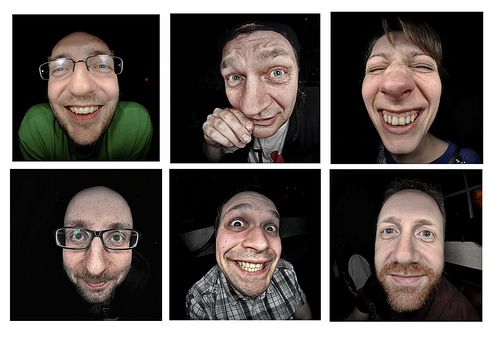
Image of a variety of people

Divide critics into two groups: reasonable and unreasonable.

To be on the safe side, assume the critic is reasonable and will be satisfied with corrective facts, a valid explanation or a sincere apology if you’ve messed up. If the critic belongs in the unreasonable camp, you’ll know soon enough by the follow-up responses you get.

Once you have identified an unreasonable critic and you’ve attempted to engage the critic—without success—the best thing to do is simply ignore future criticism from that person. Not only will you save a lot of time and grief, but posting a rational response that is rebuffed by an irrational person may actually help you. Your response will satisfy the majority of rational people, give them a favorable impression of your company and help them see the unreasonable critic for what he/she really is—unreasonable.

photo credit: Fisheye + Ringflash + Pub = via photopin (license)

Ad Agency PR: Can It Guarantee Publicity for Your Agency or Client?

NewsChannel 5 Truck

One of the biggest challenges in ad agency PR is managing expectations for publicity. If you work in the PR industry long enough, there’s a good chance that sooner or later you’ll be asked if you can guarantee news media coverage of a new product, service or event.

Better yet, someone in your agency will say or imply that you can get coverage in an effort to impress a client or win a new piece of business.

Generally speaking, no one working in PR can guarantee coverage in a legitimate publication or program.

I’ve seen exceptions—such as a small newspaper, radio station or trade publication offering coverage in exchange for advertising—but the higher one goes in the news media chain, the less likely it is that such an exchange will take place. In fact, most media outlets would be downright insulted if approached that way.

What can be promised is that the PR practitioner will devote his or her best efforts to success; explore a variety of possible angles; utilize knowledge and experience (such as understanding how news media operate and what constitutes a good story from their perspective); and leverage existing relationships with reporters in a good-faith effort to generate positive coverage.

Still, there’s always the possibility of striking out. And that can sometimes be hard for advertising executives or clients to understand because they think the story idea is great and everyone should be interested in it.

Maybe it really is a great story, but the timing isn’t right because the targeted media outlet recently did a similar story; perhaps there are other earth-shattering events taking place that have crowded your story out of the running. Or, possibly, gatekeepers have made it impossible for you to reach the right people.

There are days when a career in advertising sounds pretty good compared to a career in PR with all its uncertainties. While advertising and PR should both base their strategies and messaging on research, advertising has the distinct advantage of being able to control the message, determine where it runs and when.

With publicity, you have no real control over the message—though you can influence it—and you have no control over where a story runs, when it runs or even if it runs—not to mention that the publicity may backfire by being negative.

Despite these drawbacks, PR has an advantage that no other marketing tool can replicate, and that is giving your agency or client credibility.

That’s because publicity allows an objective secondary source–the news media or bloggers–to tell your story to the people you want to reach. Best of all, publicity does so at no cost, (other than what one might be paying a PR person to do the story crafting and pitching).

It’s this high risk/high reward carrot that makes PR so energizing and addictive. Win or lose a particular publicity battle, it’s worth the challenge. I guarantee it.

photo credit: Pensacola Beach Oil Spill Craziness via photopin (license)

Eight Essential Tools for Ad Agency PR

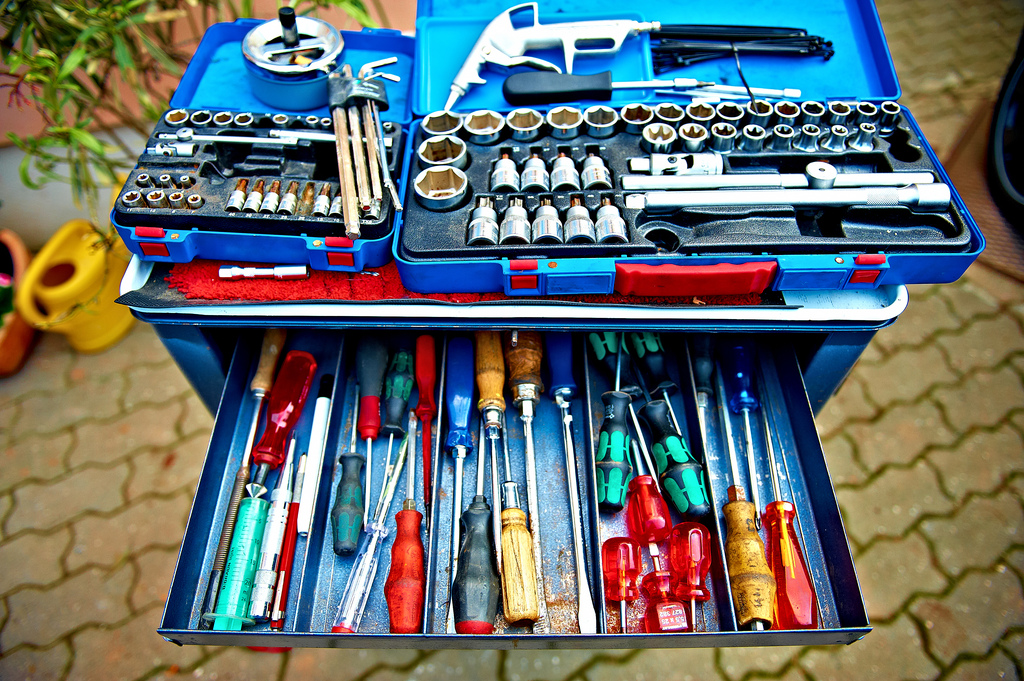
Photo of an open toolboxA strategic ad agency PR plan that compliments new business initiatives with a clear focus, target and purpose can be a powerful way to get discovered by prospects and drive sales. Here are eight must-have tools, many of which are free, that will help you get the most out of your agency’s PR activities:

The Associated Press Stylebook

The Associate Press (AP) Stylebook is a handbook used by journalists and PR professionals throughout the world as a guide for writing style, grammar, spelling and punctuation. Follow AP style in your news releases and other media materials, and you’ll gain some instant credibility with reporters and editors.

Media Directories

Sure, you can do an Internet search to track down news media people, but a good media directory is worth its weight in gold. Cision Global Media Database and Bulldog Reporter’s MediaPro Database are two of the best. Cision has 1.6 million records, with editorial calendars and media databases of print, broadcast, Internet news sites, social networking sites, bloggers and news bureaus. While that information alone will save you a lot of time, the greatest value for me is the “contact notes” section, which offers insights into what a particular reporter wants, and how and when he/she prefers to be contacted. Here’s a sample entry from a computer/high tech reporter for USA Today:

  • “Works from home, but prefers all materials be sent to the paper.”
  • “Prefers to be contacted by e-mail and hates follow up calls.”
  • “She is interested in the ideas behind technology, not the products.”

Some contact notes might say something like, “Do not call Tuesdays afternoons as he is on deadline.” If you don’t know that and you call him Tuesday afternoon, and he happens to answer the phone, you’re going to be off to a bad start before you say a word.

Headline Analyzer

The free CoSchedule blog post headline analyzer scores your headline on its length, structure, grammar and readability.

Emotional Marketing Value Headline Analyzer

If you want to see how well your headline connects emotionally, the Emotional Marketing Value Headline Analyzer will give you a score ranking from 1 to 100. The higher the score, the better your headline. The headline analyzer will also tell you which emotion – intellectual, empathetic or spiritual – is most impacted in a reader’s mind.

Press Release Grader

PRWeb’s Press Releases Grader is a free service that evaluates releases and gives instant feedback on how to improve them so they are more visible to search engines, more engaging and do a better job of driving traffic to your site.

Help A Reporter Out (HARO)

HARO is a newsletter that is e-mailed daily to subscribers with leads from reporters seeking sources for stories. The leads are organized into categories (Business & Finance, Health/Fitness, Lifestyle, Technology, etc.) with specifics about each story, what information the reporter is seeking and contact information.

RadioGuestList

RadioGuestList matches guests with expertise on particular topics with the hosts who want to interview them. Radio talk show, podcast, online radio show, satellite radio and TV program bookers and producers use it to discover new interview guests.

BloggerLinkUp

BloggerLinkUp connects bloggers looking for help with guest posts with people who are looking to get links and exposure by writing guest posts. There also are opportunities to have products reviewed by bloggers and to get in touch with bloggers who do interviews and need sources for stories.

HARO, RadioGuestList and BloggerLinkUp are FREE, and they bring daily leads to your inbox.

photo credit: Order Of Battle via photopin (license)

2015 Fuel Lines New Business Conference Was Loaded with Helpful Ideas and Insights

Michael Gass speaking at the conference

Michael Gass organized the inaugural Fuel Lines New Business Conference in Nashville

I’m still unpacking all I heard at last week’s inaugural Fuel Lines New Business Conference for advertising, digital, media and PR agencies. The conference, which drew people from more than 60 cities—including a few from outside the U.S.—was held at Nashville’s snazzy new Music City Center. It was organized by my friend and colleague Michael Gass.

Because there were concurrent breakout sessions, it wasn’t possible to attend everything over the two-day period. But, I learned plenty from the sessions I was able to make. Here are 10 observations that struck me as particularly noteworthy from some of the thought leaders who spoke (though they only scratch the surface):

  • Nothing is more powerful than a human insight (Peter Levitan)
  • Chemistry is the key factor in new business presentations (Peter Levitan)
  • Create personas of prospective clients to prepare customized new business presentations (Bob Sanders)
  • We have grossly exaggerated the importance of brands to consumers; most of what we call brand loyalty comes from habit and convenience (Bob Hoffman)
  • The key factors for international agency business are trust, proximity, special skills/expertise, process and global reach (Julian Boulding)
  • Don’t be afraid to specialize in what you do best (Stephanie Holland)
  • Write RFPs with simple words and phrases, and eliminate unnecessary words; a confused mind always say no (Jody Sutter)
  • Give RFP prospects something extra of value (Jody Sutter)
  • Pick a niche and own it; don’t be afraid to say no to opportunities outside your niche (John Sonnhalter)
  • Positioning is foundational for new business; an agency should have a specific target and strong point of differentiation (Michael Gass)

In my breakout session, “How to Craft an Agency PR plan that Drives New Business,” I discussed the building blocks of creating a performance-based public relations plan for one’s agency. I also explained how the strategic use of PR can enhance awareness and credibility; distinguish an agency from competitors; and make it easier for agencies to be found by decision makers.

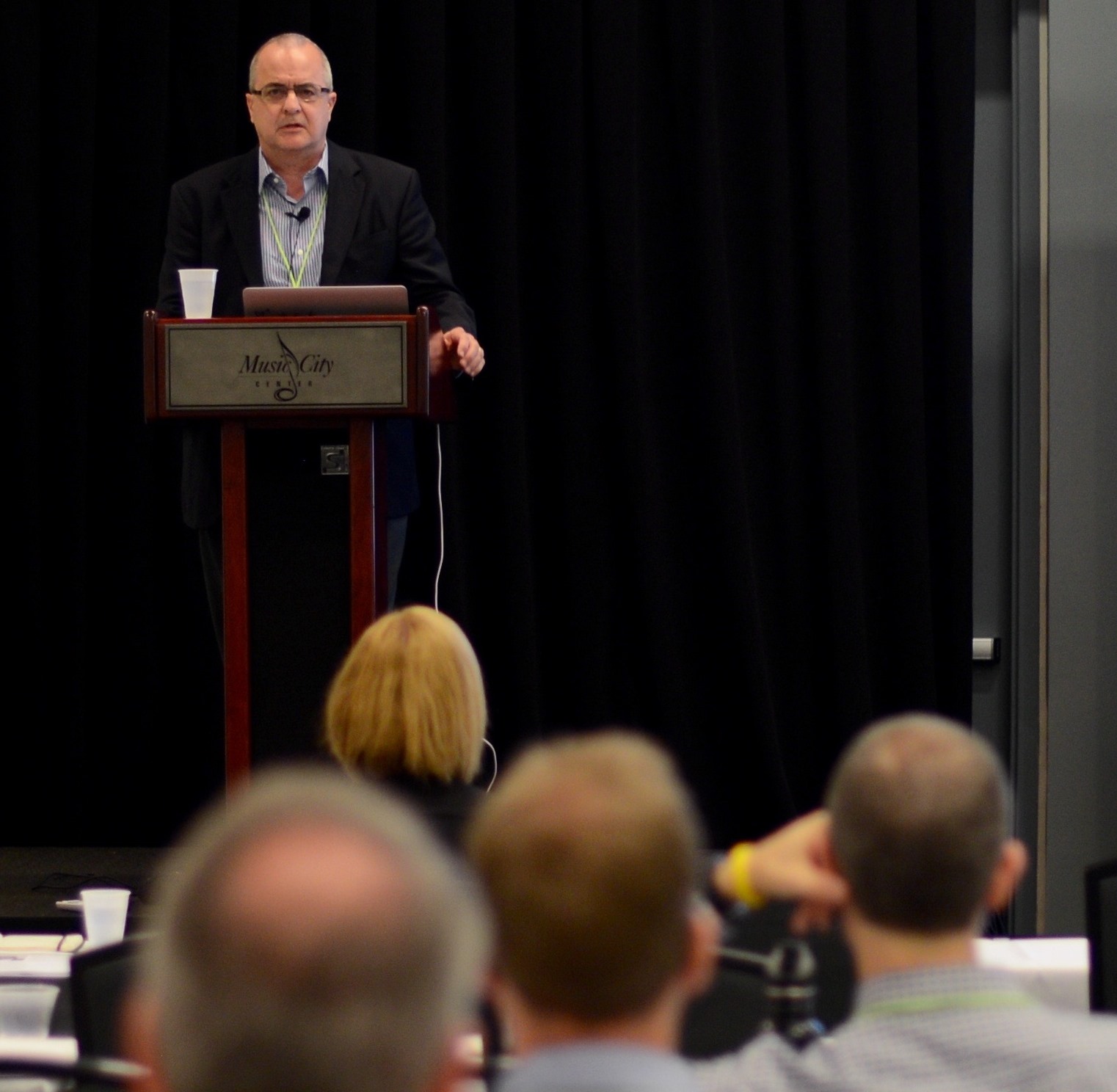
Don Beehler speaking at the conference

Speaking about ad agency PR at the Fuel Lines New Biz Conference

My three most important points:

  • Consistency is vital for successful agency PR
  • Becoming a trusted source is the quickest way to increase awareness and gain credibility
  • A successful PR plan is strategic with a clear focus, target and purpose

I sure hope Michael will have a second annual conference next year. This not only was a great learning and networking experience, but also a lot of fun.

New Social Journalism Study & What It Means for Ad Agency PR

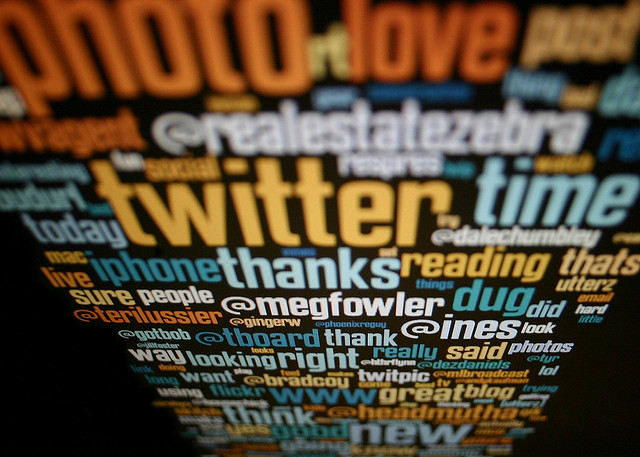
Twitter with tweets

A new Social Journalism Study by Cision and Canterbury Christ Church University found that social media has become an essential part of journalistic practice, with 94% of respondents saying they use it on a daily basis.

“Four years ago, a majority of journalists were hesitant to utilize Twitter and Facebook, and seemed especially skeptical about how these sites could help them reach audiences near and far. But now, we see a shift towards journalists relying on the networks to get their jobs done,” Cision noted in its introduction to the study.

The three findings I found with the most significant implications for ad agency PR were:

  1. Twitter is the most popular social media app. About three-quarters of journalists in the U.K. and U.S. said they use Twitter on a regular basis, so if you want to connect with a reporter via social media in those countries, Twitter is your best bet.
  1. Email is how most journalists prefer to be contacted. A little over 80% listed email as their first choice. For U.S. journalists, social media is their second choice, while in four of the other five countries surveyed—Finland, Germany, the U.K. and Australia—phone calls came in at #2. For now, at least, U.S. journalists seem to be the most concerned about being interrupted by calls when on deadline, or in general do not really like having to listen to pitches over the phone all that much.
  1. Experts are a key source of information for journalists. No big surprise here really, but nevertheless this study confirms that one of the main reasons journalists use social media is to find sources and network. In the U.S., experts were cited as the most important source of information (40%) over PR sources (36%).

There also is this interesting trend prediction from the study: “Journalists will continue to rely on experts so they do not compromise their values and views of their profession by sourcing from perceived unreliable sources.”

For ad agencies, the implication is clear: Having a niche, building your reputation as an expert in that niche and making your agency “discoverable” is more important than ever, and it will continue to be in the foreseeable future.

photo credit: JefferyTurner via photopin cc

Nashville Conference Will Focus on New Drivers of Agency Business Development

Photo of Nashville Convention CenterIf you’re looking for growth strategies for your agency, be sure to check out the Fuel Lines New Business Conference 2015 in Nashville, Tennessee, October 8-9.

The conference is designed for agency principals and their management, new business and senior account management teams. Attendees will learn from new business thought leaders with a laser focus on the new drivers of business development.

“New business has been a problem historically for agencies. It’s made worse with the paradigm shift in business development. The primary battle for new business has moved online. It’s now more important to be FOUND than to CHASE new business,” noted Michael Gass, founder and president of Fuel Lines Business Development.

And that, in a nutshell, is why this conference is so important: It will help you make your agency more easily discovered by key influencers and decision makers.

I’ll be leading the October 8 breakout session titled “How to Craft an Agency PR Plan That Drives New Business.” In my guest post on the Fuel Lines blog, I discuss what I believe is the key to using PR to drive agency leads and three planning steps to help maximize PR for new business.

The conference has early registration discounts and is limited to the first 200 registrants. Super early registration ends June 15. Visit here for more information or to register.

15 Questions Ad Agencies Should Ask Before Engaging PR Services

Conference room photo

For many small- to medium-sized ad agencies, public relations can be a mystery.

Ad agency principals are experts when it comes to strategy, branding, creative and messaging, but dealing with reporters can be intimidating if one doesn’t fully understand how public relations works and the “magic” used to generate publicity and goodwill for clients or an agency.

It’s not unusual for ad agencies or their clients to say they want to use PR because “no one knows us outside out of (city, region, industry).” They want to increase awareness.

If I were to ask why they want to gain awareness, they may very well look at me and say, “Well duh, we want more people to know about us so that we’ll grow and make more money.”

Fair enough. But if I ask how PR is integrated into their new business plan, more likely than not I’ll get blank stares.

Yet increasingly, decision makers are finding vendors rather than the other way around, which make PR more important than ever for new business success.

Instead of chasing new business through cold calls, which has very limited effectiveness these days, agencies need to use PR strategically to help them be discovered by decision makers.

Here are 15 questions to help your agency get started on the road to PR success.

These questions are designed to assist you in assessing your situation, your highest priorities and needs, and what you really want to accomplish through public relations.

Once you and your team have thought through and answered these questions, you will be much better prepared to have a productive conversation with a PR person or PR agency:

  1. What is the desired result from PR (e.g. increase awareness, change perception, be positioned as an expert in a particular niche, generate new business or something else)?
  2.  How would you rate your agency’s PR capabilities on a scale from 1-10, with 10 being the best and 1 the worst?
  3. How would you rate your agency’s new business focus on a scale from 1-10, where 10 is perfectly targeted and 1 is we’re all over the map?
  4. Are you looking for PR help with your agency, to offer it as a service to clients, or both?
  5. What is the primary way you use or would like to use PR in your agency: Agency promotion, new business development, provide as a service to clients or enhance integrated marketing communications capabilities?
  6. How effective were your past PR efforts (assuming you had some)?
  7. What PR opportunities can you identify that have not been maximized?
  8. How would you describe your agency’s positioning/branding?
  9. How would you define your target audience for new business?
  10. How should PR integrate into your new business strategy?
  11. How does social media fit with your new business strategy and PR?
  12. Where would you like to obtain publicity (i.e. target publications, bloggers, radio/TV programs)?
  13. What speaking events would you like to be invited to participate in, and how can PR help with that?
  14. How will you define PR success?
  15. How will you measure that success?

photo credit: timailius via photopin cc


What “The Thing” and Ad Agency PR Have in Common

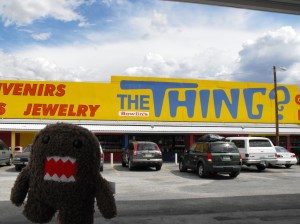
The Thing in ArizonaIf you’ve ever driven across Arizona on I-10, you’ve no doubt heard aboutThe Thing.”

Along a 200-mile stretch in the desert 247 billboards cry out to drivers to come see “The Mystery of the Desert.” The Thing.

Mile after mile, there’s nothing much to look at along the roadside except red, black and yellow signs tantalizing readers to stop and view The Thing. It’s been a tourist attraction since 1950, and surely one of the greatest marketing campaigns of all time.

Years ago one of my clients told a story about a colleague whose father was a professor. They lived in California, but each year the family packed up and headed east where his father taught during the summers.

Their summer journeys took them through Arizona, so as a boy this colleague had to ride past these billboards—at least one every mile—about The Thing. You can imagine how irresistible it must have been for him; he desperately wanted to stop and see The Thing, whatever this mystery was.

But there was a problem: it cost a quarter to see The Thing.

His father was a real tight wad and refused to spend the money. And so every summer, year after year, this boy had to endure 200 miles of teaser billboards about The Thing.

Signs like, “The Thing?” then a littler farther down the road, “What is it?” and then “The Thing – What is it?” and “Don’t miss the thing!”

It sort of hurts to think about that, doesn’t it? This boy grew up never getting to see The Thing.

Fast forward some 20 years later, and this boy, who is now a man, finds himself traveling that same highway on a business trip. Only this time, he is NOT going to be denied.

He turns off the exit, pays the admission fee and goes inside to gaze at The Thing. The Mystery of the Desert.

After finally fulfilling this life-long dream of seeing The Thing, he called his father, who was now retired.

Dad, you’ll never guess where I am!” he said when his father answered the phone.

“Son, I have no idea. Where are you?”

“I just saw The Thing!”

His father was appalled. “You paid a quarter to see that Thing?”

“No, Dad, it’s a dollar now.”

When his father got over the shock of his son spending his money so foolishly, he said, “So, what is The Thing?”

There was a pause, and then with a smile you could hear through the phone came this reply:

“I’m not going to tell you.”

While there are probably a number of lessons that could be learned from this story, the one I want to focus on is the power of frequency.

Ad agencies know that for advertising to maximize its potential, there has to be sufficient frequency to effectively convey the advertising message and move the target market through the multi-step process that starts with awareness and ends with purchase.

Consistent advertising also reinforces a brand and provides top-of-mind awareness.

Yet when it comes to ad agency PR, agencies often lack consistency in their public relations efforts, relying instead sporadic activity. This is not the optimum way to utilize public relations, especially publicity.

Consistent ad agency PR can help you . . .

  • Build your agency’s brand and reputation
  • Give you a stronger presence in the marketplace
  • Make you more “discoverable” among those whom you most want to reach
  • Gain expert status for a particular agency niche

Frequency works extremely well in marketing The Thing, and it will work for your ad agency PR efforts.

photo credit: Tim Patterson via photopin cc

Ad Agencies: Are You Winning Awards or Market Share?

Image of a trophyA number of years ago, I had the opportunity to work on a project with Coca-Cola Bottlers. One evening I went to dinner with the Coke representative for this project, and the subject of Pepsi’s advertising came up. At the time Pepsi was known for churning out some very creative and entertaining TV ads, and it had been successful in generating a lot of buzz.

Acknowledging his competitor’s advertising success, the Coke rep smiled and said, “Pepsi wins awards, and we win market share.”

Touché. He had put his finger on a problem that too often plagues agencies, whether they are focused on advertising, public relations, promotions, direct marketing, digital or some combination of them.

Agencies like to tout their awards, but at the end of the day if you aren’t helping your clients sell more of their products or services, or enhancing their reputations and goodwill, how much good are you really doing them?

Although I specialize in public relations, at one time or another in my career I’ve been involved in nearly every aspect of marketing—and I’ve been fortunate to have been part of some very talented teams that have won professional awards.

Creativity is important, but the most meaningful awards are those that can
be tied to achieving specific results and objectives.

In fairness, it’s important to recognize that agencies often lack control over a variety of factors that can affect a client’s sales. And it’s certainly possible for agencies to win awards and market share for their clients, so it doesn’t have to be one or the other. But too often I’ve seen agencies fall into the “Pepsi syndrome” of focusing more on the awards they’ve won than on how they have helped clients meet their business objectives.

When it comes to ad agency new business, PR should be playing a critical role in your overall strategy. If your agency’s PR efforts are winning awards but not helping you achieve new business success, it’s time to reevaluate what you are doing and how you are doing it.

photo credit: cliff1066™ via photopin cc