10 New Business PR Questions that Make Agencies Pause

Last week I passed the 12-year mark with my public relations consulting business. During that period, I’ve been blessed to work with some outstanding clients – more than 70 of them in a wide variety of industries.

Before going out on my own in 2002, I spent a decade with advertising and PR agencies in Chicago and Nashville, where I worked with clients from local to national levels. So, all together, it’s safe to say that I’ve served well over a hundred clients in my career.

After 22 years in the agency business, when someone approaches me to help with a company’s PR needs, I’ve learned to ask a lot of questions up front to make sure I understand what the prospect really is after, whether he/she has realistic expectations, and how success with be determined and measured.

I’ve also identified a number of red-flag questions. Some of those questions (or statements) are covered in this PR Daily article “8 things you should never say to PR agency pros”  by Dorothy Crenshaw, CEO and creative director of Crenshaw Communications.

My two favorites from her list are:

  • How much for a press release?
  • We’re looking at 30 agencies and hope you’ll want to participate.

I decided to create my own list of questions I’ve heard from prospective clients over the course of my agency career that caused me (and sometimes my colleagues) to pause. They weren’t always in these exact words, but here’s the gist of what they were asking:

  1. We don’t have much of a budget – can you help us anyway?
  2. What will it cost us to work with you?
  3. How much publicity can you get us?
  4. How long will it take to get results?
  5. What would it take to get us on (name a national media outlet)?
  6. If we have x dollars to spend on advertising or PR, how much should we spend on PR?
  7. Can you guarantee us we’ll get a certain number of media hits?
  8. Are your fees negotiable?
  9. Can we try you out for 30 days and see how it goes?
  10. Are you willing to tie your compensation to your results?

The short answer to most of these questions is “it depends.” For me, a couple of them are “no” responses, though that can vary from agency to agency.

But the real point is that the questions themselves may indicate a misunderstanding of how public relations works and the costs associated with it.

The most efficient way for a client to work with an agency is to first have clearly thought through what it is they want PR to accomplish for them and how it will integrate strategically into other marketing efforts.

Having a budget established upfront helps a PR professional determine how to get maximum value for the client instead of wasting time trying to guess what that client is willing or able to pay.

And while professional skills and competence are vital, I’m convinced that trust is at the core of any successful client-agency relationship, and that character is every bit as important as sound strategy, outstanding service and dynamic creative.

One of my former agency colleagues used to say it boils down to this when a potential client selects an outside person to help accomplish something: Do I like this person, do I trust this person and can this person get the job done?

Those are three great questions and if you can answer “yes” to all three of them, you’ve likely found a good match.


Cleveland’s “Communicator of the Year” Learns Brutal PR Lesson

Newspaper headline with sobering job statsOn any given day I usually get a number of emails from various PR/communications news and information sources. And truthfully, more times than not, I glance at the subject lines and usually don’t take the time to read them unless something really stands out.

But yesterday, when I ran across this subject line, I had to stop and take a look for myself: “Brutal emails to employment seekers.”

What sort of person would write a brutal email to someone looking for a job, I wondered? Then I was introduced to Kelly Blazek, manager of a Cleveland-area job bank and principle of Gemba Communications, LLC. Oh, and she also was Cleveland’s “2013 IABC Communicator of the Year.”

So now I was even more intrigued – a person who is expected to have good people skills and manners, and a certain level of social media savvy, was replying to some job seekers in what can only be described as rude, demeaning, “How-dare-someone-like-you-contact-someone-like-me” language.

She actually seemed to enjoy belittling people who were seeking help, which is why I think this story resonated so strongly with people when they heard the details.

You can read some of what this little sweetheart from northeast Ohio had to say to folks seeking to network with her or be part of her job bank in this PR Daily article and in Cleveland.com, which as of a few minutes ago had 431 comments, most of which were not very favorable toward her. This afternoon, CNN picked up the story with the headline “Nasty LinkedIn rejection goes viral.” Uh oh.

Apparently Ms. Blazek hadn’t considered the possibility of some on the receiving end of her vitriolic responses taking to social media to expose her nastiness, which is pretty stunning when you think about it.

What communications professional in this day and age isn’t aware that anything one puts in writing to an individual – particularly through a platform like LinkedIn – can be made public via the Internet for the world to see?

Not surprisingly, Ms. Blazek is getting raked over the coals in Cleveland and throughout the PR community.

She apologized for her rudeness – which is all well and good – but really, what else could she do when this blew up in her face? Is she truly sorry for her behavior or just sorry that she got caught? Only she knows, but I found this comment on the Cleveland.com site revealing, if true:

“I know Kelly quite well, and she’s only kind and gracious when it benefits her. To those she deems beneath her, well, she can be quite sadistic. This is Long Time Coming and Just Desserts in my opinion.”

So what lessons can be learned from all this?

For one thing, character really does count and how we relate to others really does matter, regardless of their “level” or what they can “do” for us.  The Gold Rule – treating others as you would like to be treated – is the best policy for personal and professional success.

A second lesson is that apologizing isn’t always some magic bullet to make things better. For sure, this whole sorry matter would have been worse had she not apologized, but the fact that Ms. Blazek went to some lengths to write these demeaning replies to multiple people tells me she enjoyed all this, which really says something about this lady’s psyche. I can’t imagine anyone wanting to do business with her.

But even giving Ms. Blazek the benefit of the doubt that her apology was sincere, what’s most troubling to me is the glee she seemed to take in kicking people who may already be down emotionally.

At one time or another most people have had to look for a job, and it can tough – especially in today’s market. They face a lot rejection. So the last thing someone needs when trying to network with someone running a job bank is to get a demeaning “you’re a worm” response from a person who should be supportive and encouraging of others.

To this day I remember very clearly people who, early in my career, took time to speak with me and helped me network when I was job hunting. And I remember some who wouldn’t give me the time of day, but thankfully I never got the sort of awful treatment this lady dished out.

If people are such a pain to her, she really ought to get out of the communications business.

Third, even if someone you don’t know requests help or an endorsement, be polite in declining the request. Sure there are job hunters who are presumptuous, annoying or clueless, but you never know what a person has been through on a particular day. Some of them might be desperate, and the way you respond to them might make or break them. I’ve been fortunate to have some good mentors, and one thing they taught me was to show dignity and respect to all people.

Fourth, this incident clearly demonstrates how quickly a crisis can develop and then spiral out of control. Once one of her responses went public and was discussed on a local radio show, others who had received similar correspondence began to surface. And I wouldn’t be surprised if more followed.

Will Ms. Blazek be able to recover and resume her communications and job-bank businesses? Time will tell but if I were her, I’d hang on to those job-bank contacts because she may be needing them soon.

photo credit: Sadie Hernandez via photopin cc

Here’s How to Generate Publicity that Grows Exponentially

Bundle of newspapers

Last week I was once again reminded of the old PR maxim that publicity begets publicity. For one of my clients, a well-timed news release on a topic that coincided with a high-profile national issue transformed the initial release into a news generator that came in exponential waves. And the hits and interview requests just keep coming.

One of the things that can really jump-start publicity efforts is to have a national media outlet do an original story based on the release.  That happened in this case, which expanded the publicity much further than would otherwise have been the case. And now, as word continues to spread among the news media and via social media, new opportunities to keep the story going continue to surface.

Sounds easy enough, but making this “magic” happen is much more difficult than it may appear to someone who’s never tried pitching a story idea or circulating a news release to reporters who are swamped with competing requests and breaking news items.

So, how do you know if your story idea will generate publicity or end up in a black hole that never sees the light of day?

One of the most important ways you can improve the odds of generating publicity is to understand the criteria news media use to determine the value of news.

Here are the ones I believe are most important:

  • Consequence to readers/viewers
  • Prominence of the individual/organization
  • Proximity to the area served (if a local or regional news outlet)
  • Conflict
  • Controversy
  • Timeliness
  • Human interest
  • Consumer trends
  • Novelty or unusualness of the story

In my experience, you need to have at least one of these criteria to be modestly successful with your publicity efforts, and in most cases at least two if you are to have any chance of the publicity going “viral.”

The more of these elements you can add to the mix, the higher your probability of getting good hits. Influencers can also greatly help with your publicity efforts as they pass along the story – and their thoughts about it – to others via social media and/or personal contacts with reporters.

Generating publicity isn’t rocket science, but you need the right mix of rocket fuel for a successful launch.

photo credit: Steve Rhodes via photopin cc

A “Back-Door” Strategy for Getting Ongoing Publicity

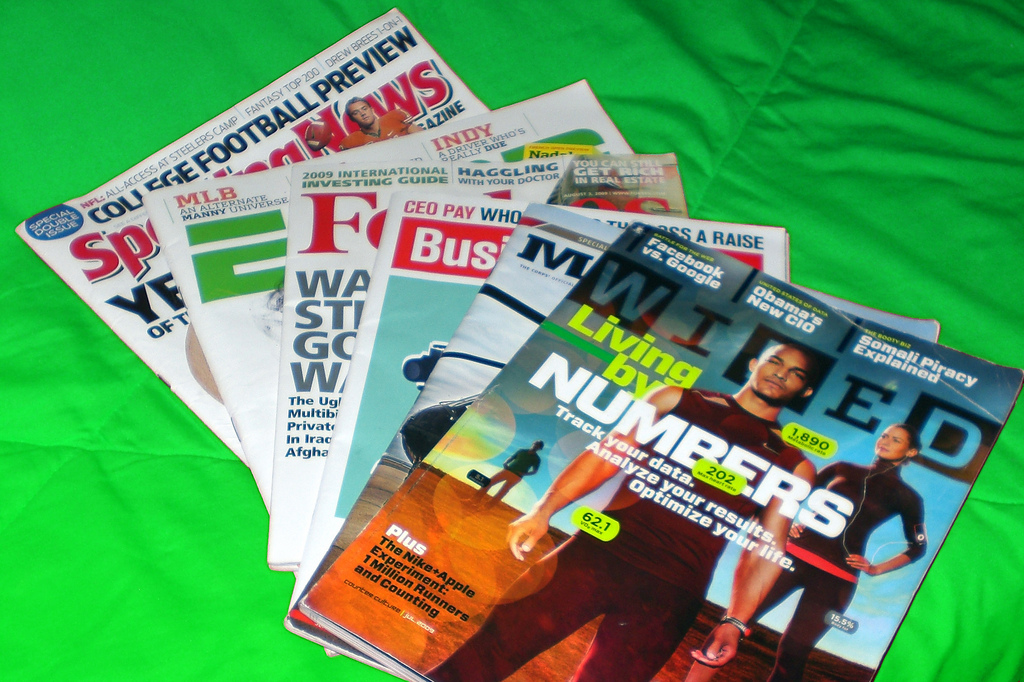
Variety of Magazines

There used to be a famous print ad featuring a skeptical-looking businessman saying something along the lines of, “I’ve never heard of you, your company or your product. Now what is it you want to sell me?”

If being known was considered an important part of the pre-sales process a couple decades ago – before the world was saturated with social media and a host of online venues to critique products and services – imagine how much more important awareness and a positive image are for a company today.

People make purchasing decisions every day based on a company’s reputation. While recommendations from friends and online reviews are important, news media coverage is near the top of the influencer scale because of its perceived credibility.

Even companies with well-established brands and a sophisticated social media presence use publicity to nurture their reputations and maintain awareness.

As I wrote in a previous post, assigning a financial value to publicity can be challenging, but there’s no question that consistent publicity pays off. Image-conscience companies understand its strategic worth, as well as how positive publicity can help them gain a competitive edge over competitors by positioning them as experts and creating top-of-mind awareness among important audiences.

The flip side is that publicity is often not easy to get – unless there’s a crisis, scandal or something new and innovation. However, there is a “back-door” way to get ongoing coverage, if you’re willing to be part of a broader, multi-source story rather than the single focus of one.

Becoming a reliable source for reporters covering your industry – a source that is knowledgeable, articulate, easy to work with and responsive to requests for comments and expert insight – will raise the profile of your ad agency or organization in a way that can’t be beat by any other medium.

photo credit: hectorir via photopin cc

Consistent PR Is Vital to New Business Success

While public relations provides credibility that no other marketing tool can replicate, the lack of a consistent PR effort can cause top-of-mind awareness to diminish over time.

For advertising to be effective in building a brand, it needs to have a certain level of frequency to keep the brand in the forefront of customers’ and prospects’ minds. The same principle applies when utilizing publicity and other PR disciplines to help build a brand and attract new business.

A start-and-stop PR effort is a little bit like start-and-stop exercise – it’s better than none at all, but not nearly as effective as a consistent effort.  Just as running an ad once every six months won’t provide enough ongoing exposure to be very effective, the same is true with having an occasional story in the news media or a blog with excellent content that’s infrequently updated. Effective adverting and PR both require frequency to reinforce messages in the minds of your target audiences.

A consistent PR program can help ad agencies and organizations not only get more exposure with important audiences, but also compliment new business efforts. Marketing strategies increasingly are geared toward making companies “discoverable,” and PR can play a key role in this process through publicity, content marketing, social media and special events.

Finding ways to keep your company, product or service consistently generating buzz through PR will help you drive sales, get discovered by prospects and strengthen relationships with existing customers.

14 Ways to Generate Great Content in 2014

New Years Fireworks

It seems as though every week or so I run across an article, post or e-mail trumpeting the benefits of great content. But creating content that stands out from the pack isn’t easy to do, and sometimes even trying to define what constitutes excellent content can be a challenge.

For some time now Google has been the big dog on the Internet when it comes to deciding whose content is noteworthy. The right keywords are important to help your content get found, but increasingly Google is looking to social signals from consumers – in the form of shares and links, as well as traffic to the site – to identify stellar content.

So, what sort of content do people like so much that they want to share it? There probably are a number of opinions about that subject. Here’s mine.

First and foremost, great content is enjoyable to read. It’s well written, relevant, timely and to the point, without a lot of extraneous fluff and stuff. It’s not a disguised sales pitch, a headline that promises one thing but delivers another, or a recycled version of conventional wisdom that really doesn’t offer anything new.

Below are my suggestions for 14 ways to generate great content in 2014.

Of course, you won’t use all of these suggestions with each piece you write, but keeping them in mind will help you develop copy that is fresh, lively and on target for your audience:

  1. Offer new insights
  2. Provide new information
  3. Be practical and relevant
  4. Converse in an easy-to-understand manner
  5. Offer guidance for solving a problem
  6. Tackle a tough or controversial subject
  7. Offer thoughtful analysis
  8. Discuss a trend and its implications
  9. Make a prediction
  10. Take a counter viewpoint – or at least a different slant – to conventional wisdom on a particular topic
  11. Offer tips and advice that are actionable
  12. Answer questions
  13. Tell a story
  14. Make an emotional connect

photo credit: Daniel E Lee via photopin <a

Seeking to Duck Controversy, A&E Becomes Duck Soup

I support Phil Robertson and his right to express his faith and his beliefs.As I wrote in a Tennessean op-ed column several years ago, whether you believe the Bible teaches that the practice of homosexuality is wrong or that condemning it is the greater offense, you have to admire the masterful public relations machine employed by the gay-rights community.

With great patience and PR skill, GBLT advocates have made incremental gains over the years by consistently advancing their cause as alternative lifestyles. As with any PR initiative that aims to change public opinion, they recognized early on the importance of winning over opinion leaders in Hollywood, the news media, government and education, and they proceeded to do so with great success.

In textbook style, gay-rights advocates have consistently positioned themselves as loving victims and repositioned those who disagree with them as hateful, ignorant bigots, similar to the way Scope so effectively cast Listerine as “medicine breath.”

Every once in a while, though, the T&T (Talk & Thought) Police go too far and there’s a backlash. Such was the case with last year’s Chick-fil-A controversy, which I wrote about from a PR perspective in a Baptist Press article.

Now another backlash is brewing, this one over remarks made by Phil Robertson of Duck Dynasty fame. What did Robertson say that got folks so riled? He had the audacity to warn people not to be deceived about what the Bible calls sin, citing I Corinthians 6:9-10. Talk publicly about the Bible and sin, and feathers will fly every time.

Robertson, like many millions of Christians (including me), refuses to conform his religious convictions to accommodate those who seek to legitimize a lifestyle he believes the Bible teaches is wrong. Speak truth and presto, we have instant “hate speech.”

Referencing the controversy, CNN’s Piers Morgan tweeted, “Just as the 2nd Amendment shouldn’t protect assault rifle devotees, so the 1st Amendment shouldn’t protect vile bigots.”

Morgan apparently believes that free speech should apply only to those who agree with him, and that he should be among the ones judging what is appropriate to say. Anyone who disagrees is, well, a vile bigot. Robertson was a bit crude in some of his language, but he’s not vile or a bigot.

If you want to see real bigotry and hate, read some of the things that have been said and written about Sarah Palin.

Agree or disagree with him, at least Robertson has a standard – the Bible. What standard would Morgan use to determine right and wrong? His own wisdom and insight? God help us . . .

As a society, we moved from adherence to traditional Judeo-Christian values to an obsession with tolerance and political correctness. Now we’re seeing a rising movement away from tolerance to suppression of speech and ideas that are unpopular with a large segment of liberal influencers.

People of faith have rights, too, and many are fed up with the clear teachings of the Bible being labeled as hate speech by individuals who either refuse to engage in conversation or lack the capacity to substantively discuss such issues, preferring instead to simply shut down expressions of alternative points of view.

The Gay & Lesbian Alliance Against Defamation (GLAAD) is already feeling the heat in what is being called the biggest backlash in years.

The biggest loser, though, will be A&E. The network’s knee-jerk response to suspend Robertson lit a fire under his fans and scores of others who believe in free speech.

A&E could have simply issued a statement saying that Robertson’s views are his own, and that they do not reflect the views of the network. That’s PR 101, and it would have put an end to this thing pretty quickly.

My friend and PR colleague Chris Turner has written a post on his blog about the controversy titled, “Three interview tips you can learn from Phil Robertson.” I intentionally waited to read it until I finished writing this post so that it didn’t influence my thinking. Chris makes some great points about working with places like GQ. I previously wrote a similar post about ways to counter media bias, including my advice to avoid media outlets you know aren’t going to give you a fair shake.

In Robertson’s case, though, I’m not so sure he didn’t know exactly what he was doing. Look at how much conversation there has been about sin, morality and the Bible the last few days – which as a Christian is conversation he welcomes.


Blogger and News Media Pitches Both Require This

Image

One of the things I’ve learned from spending many years in media relations is that identifying your target publicity outlets is half the battle. The other half has to do with getting the right pitch to the right person at the right time. In other words, you need to customize your pitch.

The same is true when it comes to approaching bloggers for guest posts. Lindsay Bell, the self-described “boss lady” of a popular blog called Spin Sucks, does a nice job of describing a “killer pitch” and what made it that way in a post titled “The keys to nailing a cold pitch.” I highly recommend you take a few minutes to read it.

As I read it several days ago, I was reminded once again about the similarity of principles when presenting a story idea to a reporter and a guest post idea to a blogger.

Generic, one-size-fits-all pitches – whether they are made to news media or bloggers – usually have a low rate of success.

Just this morning I had two e-mails in my inbox about doing guest posts, only in this case they wanted me to post on their sites. Both e-mails were very brief and looked like they were mass produced; there was nothing customized about them at all.

The first e-mail contained an attachment with a list of more than 40 sites, along with each site’s domain authority and page rank. Handy information to have, but not a single site appeared to deal with PR issues. So, why would I be interested in doing a guest post on any of them? Oh, and the e-mail mentioned these were sites for sponsored/paid posting. Definitely not interested in that.

The second e-mail was from a blogger in another country who simply said he was in need of guest articles for his sites, and that I should get back to him if I’m interested. No listing of the URLs for his sites or even what topics they cover. The e-mail focused on his need, rather than explaining how doing a guest post on one of his sites could potentially benefit me.

Compare that with the “killer pitch” example Lindsey describes. Not only are they light years apart in content, but they’re also going to be light years apart in the results they generate.

Taking the time to research a target media outlet or blog, understand its focus and get a handle on its audience are all necessary steps if you don’t want to waste your – and the recipient’s – time.

There simply is no substitute for doing your homework and customizing a pitch if you want to increase your odds for success.

photo credit: laffy4k via photopin cc

Macy’s Takes Unfair Hit in PR Industry Publication

Macys large__9389807862While allegations of news media bias have been around for a long time, it seems as though the problem keeps getting worse.

Sure, the way we see the world affects how we write about it, but there’s no excuse for distorting or outright misrepresenting facts because one has an axe to grind. When a journalist’s credibility is damaged by biased reporting, whatever he or she writes from that point on is inevitably suspect.

Yesterday I came across an article in Ragan’s PR Daily titled, “Macy’s blames customers for Thanksgiving opening” that struck me as particularly egregious. It’s a great example of a writer’s bias distorting the facts and running amok with his conclusions.

The story was about Macy’s decision to stay open Thanksgiving night. I’m sure the writer, Kevin Allen, is a good guy, and he certainly has an impressive journalistic background. According to his bio, he previously served as an editor and reporter for the Chicago Sun-Times, ESPNChicago.com, FoxSports.com and Ragan Communications.

I have nothing personally against Mr. Allen; I just think he ought to know better than to write such a distorted piece based on assumptions that may or may not be accurate.

I’m also wondering why PR Daily didn’t put “Opinion” or “Commentary” at the top, because it sure wasn’t what I would call an industry news article.

  • Let’s start with the headline – Macy’s is blaming its customers for something?!!  That didn’t sound like very good corporate PR to me.

It was a good headline in the sense that it peaked my interest and got me to read the article (see my previous post about effective headline writing), but it didn’t reflect reality. 

Macy’s wasn’t “blaming” it’s customers for anything.

So, in that sense, it was a poor, misleading headline because as I read the article it was apparent that Macy’s was simply accommodating its customers’ desires—in this case responding to their interest in shopping early—which is how successful companies operate.

As I noted in the comments section of this article, I’m not defending Macy’s decision. Personally I think that the real meaning and purpose of holidays like Thanksgiving and Christmas have been diminished by the emphasis on materialism, which is largely driven by retail. That said, let’s stick to the facts, please.

  • Mr. Allen writes that Macy’s polled its employees, asking them if they were willing (not wanted) to work on Thanksgiving evening.

It would be a rare person who would want to work during that time, but some people may not be able to travel to spend the holiday with family, and rather than sit home alone would appreciate the extra income.

  • While acknowledging the poll results aren’t public – an admission that he really doesn’t know the results – Mr. Allen assumes he knows what they must be.

Based on that assumption, he concludes that “Macy’s management doesn’t particularly give a flying hoot what its employees prefer.” Again, no evidence of this, merely the writer’s feelings of what must be in the cold, dark hearts of the evil capitalists who love to exploit their workers.

Ironically, in a previous article by Mr. Allen on this topic, he cites a supposed Macy’s poll question which includes this statement to employees: “We will do our best to honor your preferences.”

If the “miserly and heartless” (his words) managers didn’t care, it seems to me they wouldn’t have bothered to ask their employees whether they would be willing to work Thanksgiving evening before making a decision one way or the other.

It’s certainly legitimate to criticize Macy’s decision (count me as one who doesn’t support it), but there’s no justification for spinning the story and misrepresenting the facts.

photo credit: Fan of Retail via photopin cc

Ad Agencies: Here’s a Tool to Make Sure Your Publicity Headlines Connect Emotionally

Make Sure Your Publicity Headlines Connect Emotionally

Make Sure Your Publicity Headlines Connect Emotionally

Writing headlines has always been a bit of an art form. Putting together copy for an article, blog post or news release can actually be easier than identifying a handful of pithy words that resonate well enough with readers to draw them into the copy itself.

Newspaper editors have an even more challenging job, because not only must the headline reflect the gist of the story, but it has to fit within certain space parameters. And, because the person who writes the headline is not the same person who authored the story, the headline writer has the daunting task of moving quickly from one article to another, seeking to find appropriate words that not only grab attention, but also making them fit.

I never really appreciated the talent it takes to write good headlines until I took an editing class in graduate school.

Part of the course involved doing the design and layout of a mock newspaper. Just when I thought I had the perfect headline for a story, it would end up being a tad long and I’d have to start over again. Of course in addition to having the right length, I had to make sure that the revised headline accurately reflected the article’s content.

When it comes to writing headlines for publicity, you don’t have to be concerned about them fitting in a particular space – that’s up to the newspaper or magazine editor.

The challenge for agencies is writing a headline that draws enough attention and interest to get the reader into the text itself.

I frequently use a headline as my subject line when e-mailing a news release, so it has to be compelling or the e-mail will get trashed without ever being opened.

Now, there’s a free tool that helps you gauge how well your proposed headline connects emotionally with readers. It’s called the Emotional Marketing Value Headline Analyzer, and when you plug in your headline you’ll get a score ranking from 1 to 100. The higher the score, the better your headline.

The headline analyzer will also tell you which emotion – intellectual, empathetic or spiritual – is most impacted in a reader’s mind. The site’s Q&A section explains how this works. (Hint: It’s based on scholarly research.)

Check it out and see how long it takes you to write a headline that attains “most gifted copywriters,” status with an Emotional Marketing Value (EMV) score of 50%-75%.

(I landed a score of 38.46% with the headline for this post, putting it in the range of “most professional copywriters.” As I said, headline writing is not an easy art form to master.)

photo credit: Annie Mole via photopin cc