New Social Journalism Study & What It Means for Ad Agency PR

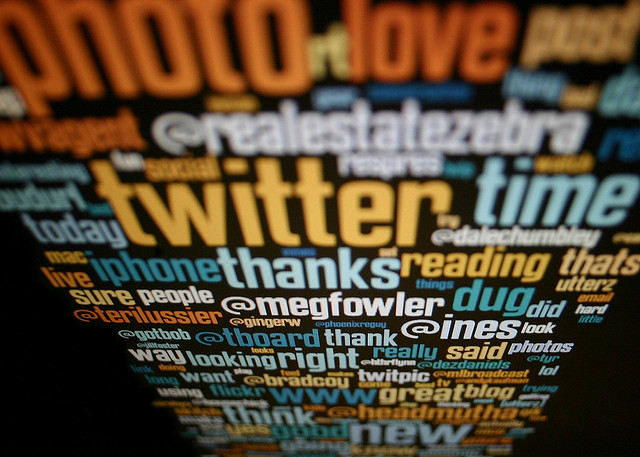
Twitter with tweets

A new Social Journalism Study by Cision and Canterbury Christ Church University found that social media has become an essential part of journalistic practice, with 94% of respondents saying they use it on a daily basis.

“Four years ago, a majority of journalists were hesitant to utilize Twitter and Facebook, and seemed especially skeptical about how these sites could help them reach audiences near and far. But now, we see a shift towards journalists relying on the networks to get their jobs done,” Cision noted in its introduction to the study.

The three findings I found with the most significant implications for ad agency PR were:

  1. Twitter is the most popular social media app. About three-quarters of journalists in the U.K. and U.S. said they use Twitter on a regular basis, so if you want to connect with a reporter via social media in those countries, Twitter is your best bet.
  1. Email is how most journalists prefer to be contacted. A little over 80% listed email as their first choice. For U.S. journalists, social media is their second choice, while in four of the other five countries surveyed—Finland, Germany, the U.K. and Australia—phone calls came in at #2. For now, at least, U.S. journalists seem to be the most concerned about being interrupted by calls when on deadline, or in general do not really like having to listen to pitches over the phone all that much.
  1. Experts are a key source of information for journalists. No big surprise here really, but nevertheless this study confirms that one of the main reasons journalists use social media is to find sources and network. In the U.S., experts were cited as the most important source of information (40%) over PR sources (36%).

There also is this interesting trend prediction from the study: “Journalists will continue to rely on experts so they do not compromise their values and views of their profession by sourcing from perceived unreliable sources.”

For ad agencies, the implication is clear: Having a niche, building your reputation as an expert in that niche and making your agency “discoverable” is more important than ever, and it will continue to be in the foreseeable future.

photo credit: JefferyTurner via photopin cc

Nashville Conference Will Focus on New Drivers of Agency Business Development

Photo of Nashville Convention CenterIf you’re looking for growth strategies for your agency, be sure to check out the Fuel Lines New Business Conference 2015 in Nashville, Tennessee, October 8-9.

The conference is designed for agency principals and their management, new business and senior account management teams. Attendees will learn from new business thought leaders with a laser focus on the new drivers of business development.

“New business has been a problem historically for agencies. It’s made worse with the paradigm shift in business development. The primary battle for new business has moved online. It’s now more important to be FOUND than to CHASE new business,” noted Michael Gass, founder and president of Fuel Lines Business Development.

And that, in a nutshell, is why this conference is so important: It will help you make your agency more easily discovered by key influencers and decision makers.

I’ll be leading the October 8 breakout session titled “How to Craft an Agency PR Plan That Drives New Business.” In my guest post on the Fuel Lines blog, I discuss what I believe is the key to using PR to drive agency leads and three planning steps to help maximize PR for new business.

The conference has early registration discounts and is limited to the first 200 registrants. Super early registration ends June 15. Visit here for more information or to register.

Additional PR Lessons from a Baseball Manager’s Meltdown

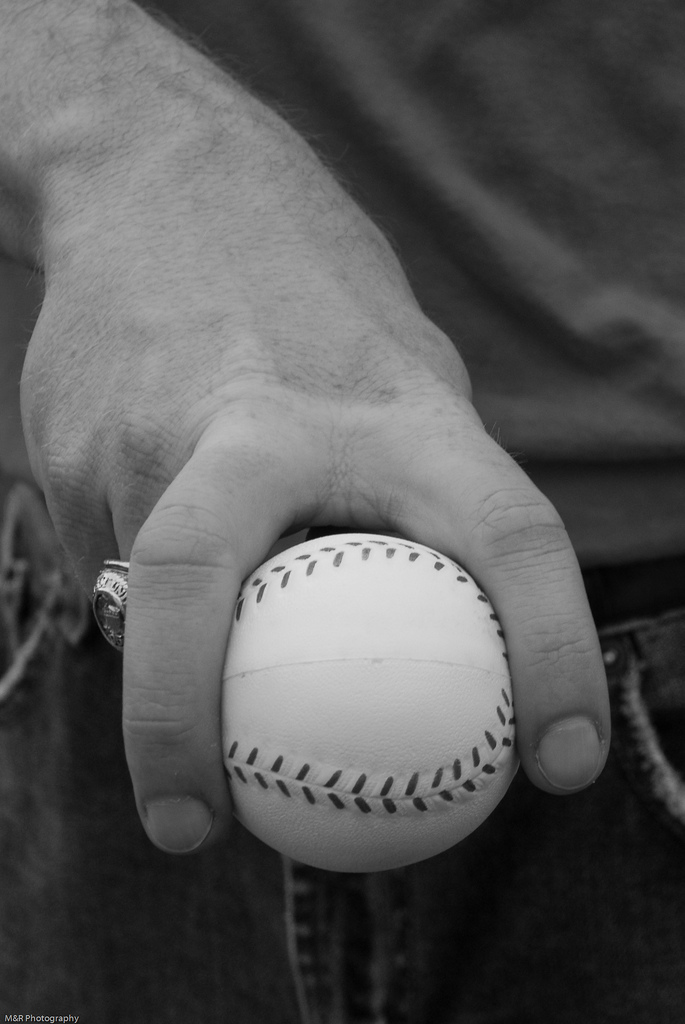
Photo of a baseballA lot has already been written about the way Cincinnati Reds Manager Bryan Price recently lost his cool (to put it mildly) in a pre-game conversation with reporters.

Writing in PR Daily, Aaron Endré offered “4 PR lessons from a baseball manager’s meltdown.”

His tips for talking with reporters are summarized as follows:

  1. Speak as if everything you say will be printed.
  2. Clarify which statements are “on the record.”
  3. Agree on when the news can go live.
  4. Keep calm.

I agree with all of them, but in the context of Mr. Price’s incident I’d like to add three more suggestions:

5. Take a deep breath and pause before responding when you’re upset.

Responding in anger is never a good idea. Take a moment to cool down—no matter how provocative a question you may have been asked or how upset you are—and think through a measured, appropriate answer.

The #1 point I stress in my media training seminars is this: When you’ve made your point, stop talking. Why? Because you usually make your best points in the initial response to a question. A skilled reporter may nod as a signal to keep you talking, but it’s prudent to resist the urge to do so or you may end up going down the swamp by saying more than you intended. The more you talk, the greater the opportunity to say something you’ll regret later on. So think before you speak, and when you speak be concise and to the point.

6. Learn and use good manners.

Common courtesy and civility seem to be in increasingly short supply these day. The issue here, for me at least, is not so much that Mr. Price got caught on tape with this profane rant, but that he made the rant in the first place. This guy must have some significant anger issues, but it’s still no excuse to behave like that. Self-control is something we should have learned in elementary school, but it’s better to learn it late than never.

7. Remember that it’s not just about you.

Maybe Mr. Price felt better after verbally attacking the reporter who upset him, but what sort of example did his behavior set for the many kids who have now been exposed to it? Whether they want to be or not, athletes and coaches are role models to score of young people who look up to them and imitate their behavior. What sort of message is he sending to them? Certainly not a very positive one.

photo credit: Opening Day 2007 – Astros via photopin (license)

15 Questions Ad Agencies Should Ask Before Engaging PR Services

Conference room photo

For many small- to medium-sized ad agencies, public relations can be a mystery.

Ad agency principals are experts when it comes to strategy, branding, creative and messaging, but dealing with reporters can be intimidating if one doesn’t fully understand how public relations works and the “magic” used to generate publicity and goodwill for clients or an agency.

It’s not unusual for ad agencies or their clients to say they want to use PR because “no one knows us outside out of (city, region, industry).” They want to increase awareness.

If I were to ask why they want to gain awareness, they may very well look at me and say, “Well duh, we want more people to know about us so that we’ll grow and make more money.”

Fair enough. But if I ask how PR is integrated into their new business plan, more likely than not I’ll get blank stares.

Yet increasingly, decision makers are finding vendors rather than the other way around, which make PR more important than ever for new business success.

Instead of chasing new business through cold calls, which has very limited effectiveness these days, agencies need to use PR strategically to help them be discovered by decision makers.

Here are 15 questions to help your agency get started on the road to PR success.

These questions are designed to assist you in assessing your situation, your highest priorities and needs, and what you really want to accomplish through public relations.

Once you and your team have thought through and answered these questions, you will be much better prepared to have a productive conversation with a PR person or PR agency:

  1. What is the desired result from PR (e.g. increase awareness, change perception, be positioned as an expert in a particular niche, generate new business or something else)?
  2.  How would you rate your agency’s PR capabilities on a scale from 1-10, with 10 being the best and 1 the worst?
  3. How would you rate your agency’s new business focus on a scale from 1-10, where 10 is perfectly targeted and 1 is we’re all over the map?
  4. Are you looking for PR help with your agency, to offer it as a service to clients, or both?
  5. What is the primary way you use or would like to use PR in your agency: Agency promotion, new business development, provide as a service to clients or enhance integrated marketing communications capabilities?
  6. How effective were your past PR efforts (assuming you had some)?
  7. What PR opportunities can you identify that have not been maximized?
  8. How would you describe your agency’s positioning/branding?
  9. How would you define your target audience for new business?
  10. How should PR integrate into your new business strategy?
  11. How does social media fit with your new business strategy and PR?
  12. Where would you like to obtain publicity (i.e. target publications, bloggers, radio/TV programs)?
  13. What speaking events would you like to be invited to participate in, and how can PR help with that?
  14. How will you define PR success?
  15. How will you measure that success?

photo credit: timailius via photopin cc


What “The Thing” and Ad Agency PR Have in Common

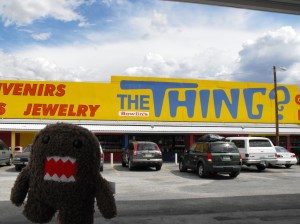
The Thing in ArizonaIf you’ve ever driven across Arizona on I-10, you’ve no doubt heard aboutThe Thing.”

Along a 200-mile stretch in the desert 247 billboards cry out to drivers to come see “The Mystery of the Desert.” The Thing.

Mile after mile, there’s nothing much to look at along the roadside except red, black and yellow signs tantalizing readers to stop and view The Thing. It’s been a tourist attraction since 1950, and surely one of the greatest marketing campaigns of all time.

Years ago one of my clients told a story about a colleague whose father was a professor. They lived in California, but each year the family packed up and headed east where his father taught during the summers.

Their summer journeys took them through Arizona, so as a boy this colleague had to ride past these billboards—at least one every mile—about The Thing. You can imagine how irresistible it must have been for him; he desperately wanted to stop and see The Thing, whatever this mystery was.

But there was a problem: it cost a quarter to see The Thing.

His father was a real tight wad and refused to spend the money. And so every summer, year after year, this boy had to endure 200 miles of teaser billboards about The Thing.

Signs like, “The Thing?” then a littler farther down the road, “What is it?” and then “The Thing – What is it?” and “Don’t miss the thing!”

It sort of hurts to think about that, doesn’t it? This boy grew up never getting to see The Thing.

Fast forward some 20 years later, and this boy, who is now a man, finds himself traveling that same highway on a business trip. Only this time, he is NOT going to be denied.

He turns off the exit, pays the admission fee and goes inside to gaze at The Thing. The Mystery of the Desert.

After finally fulfilling this life-long dream of seeing The Thing, he called his father, who was now retired.

Dad, you’ll never guess where I am!” he said when his father answered the phone.

“Son, I have no idea. Where are you?”

“I just saw The Thing!”

His father was appalled. “You paid a quarter to see that Thing?”

“No, Dad, it’s a dollar now.”

When his father got over the shock of his son spending his money so foolishly, he said, “So, what is The Thing?”

There was a pause, and then with a smile you could hear through the phone came this reply:

“I’m not going to tell you.”

While there are probably a number of lessons that could be learned from this story, the one I want to focus on is the power of frequency.

Ad agencies know that for advertising to maximize its potential, there has to be sufficient frequency to effectively convey the advertising message and move the target market through the multi-step process that starts with awareness and ends with purchase.

Consistent advertising also reinforces a brand and provides top-of-mind awareness.

Yet when it comes to ad agency PR, agencies often lack consistency in their public relations efforts, relying instead sporadic activity. This is not the optimum way to utilize public relations, especially publicity.

Consistent ad agency PR can help you . . .

  • Build your agency’s brand and reputation
  • Give you a stronger presence in the marketplace
  • Make you more “discoverable” among those whom you most want to reach
  • Gain expert status for a particular agency niche

Frequency works extremely well in marketing The Thing, and it will work for your ad agency PR efforts.

photo credit: Tim Patterson via photopin cc

How to Generate Great Content in the New Year

Fireworks

Creating content that stands out from the pack isn’t easy to do, and sometimes even trying to define what constitutes excellent content can be a challenge.

What sort of content do people like so much that they want to share it? There probably are a variety of opinions about that subject, but first and foremost, great content is enjoyable to read.

It’s well written, relevant, timely and to the point–even downright entertaining–without a lot of extraneous fluff and stuff. It’s not a disguised sales pitch, a headline that promises one thing but delivers another, or a recycled version of conventional wisdom that really doesn’t offer anything new.

Below are my suggestions for 15 ways to generate great content in 2015. Of course, you won’t use all of these suggestions with each piece you write, but keeping them in mind will help you develop copy that is fresh, lively and on target for your audience:

  1. Offer new insights or information
  2. Provide new information
  3. Be practical and relevant
  4. Converse in an easy-to-understand manner
  5. Offer guidance for solving a problem
  6. Tackle a tough or controversial subject
  7. Offer thoughtful analysis
  8. Discuss a trend and its implications
  9. Make a prediction
  10. Take a counter viewpoint—or at least a different slant—to conventional wisdom on a particular topic
  11. Offer tips and advice that are actionable
  12. Answer questions
  13. Tell a story
  14. Use practical, real-life examples to illustrate key points
  15. Make an emotional connect

photo credit: blondinrikard via photopin cc

Ad Agencies: Are You Winning Awards or Market Share?

Image of a trophyA number of years ago, I had the opportunity to work on a project with Coca-Cola Bottlers. One evening I went to dinner with the Coke representative for this project, and the subject of Pepsi’s advertising came up. At the time Pepsi was known for churning out some very creative and entertaining TV ads, and it had been successful in generating a lot of buzz.

Acknowledging his competitor’s advertising success, the Coke rep smiled and said, “Pepsi wins awards, and we win market share.”

Touché. He had put his finger on a problem that too often plagues agencies, whether they are focused on advertising, public relations, promotions, direct marketing, digital or some combination of them.

Agencies like to tout their awards, but at the end of the day if you aren’t helping your clients sell more of their products or services, or enhancing their reputations and goodwill, how much good are you really doing them?

Although I specialize in public relations, at one time or another in my career I’ve been involved in nearly every aspect of marketing—and I’ve been fortunate to have been part of some very talented teams that have won professional awards.

Creativity is important, but the most meaningful awards are those that can
be tied to achieving specific results and objectives.

In fairness, it’s important to recognize that agencies often lack control over a variety of factors that can affect a client’s sales. And it’s certainly possible for agencies to win awards and market share for their clients, so it doesn’t have to be one or the other. But too often I’ve seen agencies fall into the “Pepsi syndrome” of focusing more on the awards they’ve won than on how they have helped clients meet their business objectives.

When it comes to ad agency new business, PR should be playing a critical role in your overall strategy. If your agency’s PR efforts are winning awards but not helping you achieve new business success, it’s time to reevaluate what you are doing and how you are doing it.

photo credit: cliff1066™ via photopin cc

Do Reporters Really Hate PR Pros?

Love hate text

There’s always been a certain amount of tension between reporters and public relations professionals, even though there’s a symbiotic relationship between the two.

Reporters need credible sources and a constant stream of story ideas, while PR people need the news media to help them share important information and spread the word about their clients or employers.

PR people want coverage as favorable as possible, while good reporters want a balanced story that presents all sides and perspectives. PR people want to help shape and influence the story, while reporters bristle when they feel they are being pushed or manipulated.

While there are more PR options available than ever thanks to social media, the news media still are very important because of their reach and perceived credibility.

Anyone who is going to be successful in PR needs to be able to work successfully with reporters, so when I came across an article titled “Why do reporters hate PR pros so much?” I was intrigued.

The headline says “reporters,” which implies all reporters feel this way. And not only do reporters hate PR pros, but they hate them “so much.” That seems like a stretch to me.

It’s been quite a while since I was a reporter, but I can honestly say that I never hated PR people who contact me to share a story idea, even those who were on the annoying side. (In fairness I should mention that I wasn’t a reporter for all that long, so my attitude may have changed had I been on the receiving end of pitches year after year.)

Using several Tweets from disgruntled reporters attacking PR people to support her contention, the writer of this article asks, “Why would anyone hate to hear from someone that is trying to help them professionally?”

And therein lies an important clue as to the cynicism some reporters have toward the PR profession.

As a reporter, I never once thought that someone was trying to help me professionally by pitching a story to me. Nor was my motivation to help a reporter advance professionally by suggesting a particular topic to him or her when I flipped over to the PR side.

My motivation was self-serving:  I was seeking publicity for another party, usually one with which I had a financial interest.

If I did my homework, I knew I was approaching a reporter who covered a particular industry and subject matter to ensure that my pitch was relevant. Ideally, this resulted in a win-win situation for all concerned: A good story for the reporter and a happy client, which in turn made me happy.

The notion that reporters should want to hear from us because we want to help them professionally is about as believable as “I’m with the government and am here to help you.”

The writer goes on to conjecture that “There is something fundamentally wrong with the way PR pros relate to the media.”

That’s undoubtedly true in some cases, but there also are quite a few PR professionals who work very successfully with the media because they understand how reporters think and operate. They take the time to learn what the reporter covers, the preferred methods of contact, when the reporter is on deadline and the types of stories that interest him or her before reaching out.

One of the writer’s suggestions to remedy a PR industry that is “clearly broken,” as she put it, is to send e-mails to reporters that are not pitches but rather “how are you?” inquiries. Considering how much e-mail most reporters get, I suspect that last suggestion is more likely to irritate them, unless you know the reporter very well.

I’m not convinced that the PR industry is broken, nor am I persuaded that we can draw sweeping conclusions from a few negative tweets.

My advice to anyone who wants to be successful in working with the news media is to:

  • Put yourself in the shoes of the reporter you want to reach, and ask yourself how you would like to be approached with a story idea.
  • Get to the point, don’t waste their time and offer them something that is genuinely news or feature worthy within the niche(s) they cover.
  • Understand the details of what you’re pitching, and be prepared to give a succinct explanation as to why it’s worth their time.
  • Take into consideration the timing of your pitch. Old news or a subject that’s been covered from every conceivable angle is not likely to generate much enthusiasm.
  • Avoid taking rejection personally. Look for other opportunities and at all costs avoid being a pest.

Just as having good content is critical to content-marketing success, having a good story idea that is well targeted and properly presented is critical to success in the public relations business.

photo credit: Skley via photopin cc

What Every Ad Agency New Business Director Should Know about PR


I Love PR button

While there are many things that go into a successful ad agency new business program, one that is often overlooked or underutilized is the strategic use of public relations.

Whether your agency emphasizes outbound or inbound marketing – or a combination of the two – PR is an important tool that can help you attract attention and generate new business opportunities.

Here are six things that every ad agency new businesses director should know about PR and how it can give them a competitive edge:

First, as I have noted in previous posts, articles and interviews, PR gives your agency credibility in a way no other medium can because it allows an objective secondary source – a reporter or blogger – to tell your story for you.

Of course agencies provide background information, messaging and insights to help shape such stories, but people tend to give more weight to a news article or a post from a credible blog than from advertising or personal sales.

Second, PR is effective in building widespread awareness, which is particularly useful in getting in front of decision makers who may be difficult to reach through other means.

  • In the past PR shined brightest in generating coverage with TV, radio and print media, but today the Internet can spread the word exponentially.

Third, for inbound marketing initiatives, PR makes you easier to be discovered by prospective clients doing research to identify agencies with your area of expertise.

Fourth, PR can play a vital role in new business development through content creation and management. Many people in public relations have backgrounds with print or broadcast media. Former reporters tend to be good story tellers, which is essential for good content marketing.

  • They know how to consistently provide useful, well-targeted information that is enjoyable to read, builds trust, engages customers and enhances the brand – without coming across as disguised advertisements.

Fifth, with a creative PR writer driving your agency’s content marketing, agencies of any size can compete. To be effective, the content must be relevant, credible and enjoyable to read. It also must be search engine optimized and updated regularly to maximize its potential for attracting new business.

  • It’s easy to talk about producing high-quality, engaging content, but it’s another thing to actually do so on a consistent basis. Agencies that have the discipline to be consistent will reap rewards for their diligence.

Sixth, PR pros are generally the best suited to handle social media engagement. Public relations by definition involves dealing with the public, and PR specialists know the importance of responding to inquiries or complaints accurately, efficiently and tactfully.

  •  Because good public relations focuses on two-way communication with audiences, they understand how to converse with diverse groups or individuals, talking with them rather than at them. And because they often work with reporters who are on deadline, PR people have a keen appreciation for the value of responding in a timely manner.

Social media allows us to start or participate in conversations with individuals we might otherwise not reach. We can answer questions, solve problems, have constructive debates and gain a better understanding of issues and concerns from the other person’s perspective.

To sum it up, PR can give your ad agency’s new business initiatives unparalleled ways of gaining awareness and credibility; enable your agency to communicate directly and indirectly with prospects and influencers; and assist in building your brand and reputation in the marketplace.

photo credit: Cloudberry Communications via photopin cc

What I Learned from My Biggest PR Flop

  Swimmer doing a belly flop

Recently a client asked me to describe my biggest professional failure. (Glad he didn’t ask about my biggest personal failure, as it would have taken me a while to sort through that list.)

I was tempted to borrow Hank Dye’s response when he was asked the same question in a new business presentation. At the time Hank was president of Dye, Van Mol & Lawrence, a leading PR firm in the Southeast and the agency that brought me to Nashville.

Without missing a beat he said, “There weren’t any that the clients knew about.”

Hank understood the importance of serving clients with excellence, and when mistakes happened – as they inevitably do – he was quick to get them corrected.

One of the things that impressed me when I interviewed at DV&L was the agency’s written commitment: “We will do what is right, even if it hurts us.”

Those weren’t just words, we lived by them. (Hank, but the way, was a great mentor to me in many ways, and I will be forever grateful for all that I leaned from him and the other partners.)

Unfortunately, some failures do get noticed by clients. At the top of my list is an event I was responsible for managing that involved the launch of a client’s new product.

At the time I headed up the public relations department for an advertising agency. Everything for the event was planned in great detail. We had several well-known national speakers lined up, along with the company’s CEO and other top executives. I had hired a videographer through a national paid news service to do a video news release (VNR) to help us extend our broadcast coverage, and my team and I had done a full-court press to turn out the news media. We had an excellent press kit and media advisory, and we felt very good about the launch.

In the early morning hours the day of the event, several tornadoes ripped through Middle Tennessee, including downtown Nashville where our event was being held. Guess where all the news media were the morning of our launch? Out covering the damage. We had one TV crew show up briefly for our event, but for the most part it was a publicity flop.

The client understood that there’s nothing much we could do under the circumstances, but it still was very disappointing. We put together a post-event news release with photos, and distributed them through a paid release distribution service as well as through our media list, along with the VNR. We picked up some good national coverage that way, but not as much as we could have gotten under normal conditions.

If we are wise, we learn more from our PR failures than from our successes. One of the lessons I learned from this failure was to always be prepared for the unexpected. Rather than assuming that everything is going to go as scheduled, I now assume something outside of my control will go wrong. I ask more “what if” questions and have a carefully thought through contingency plan.

Of course this event is not the only PR venture that didn’t go as well as I planned, but it’s the one that stands out most in mind my – and the event for which I’d most like to have a redo.

 photo credit: dps via photopin cc