Win-Win Guest Posting for Blogs

Pitching a blogger for a guest post isn’t much different than pitching a print or broadcast reporter. Guest posting has to be win-win for everyone, so be sure to make it clear in your pitch why what you are proposing makes sense for that blog’s audience and how it will benefit them.

Just as you can build on local or trade-specific news media coverage to reach larger media outlets, doing guest posts on some lesser-known blogs may help you get coverage on an A-list blog down the road.

Keyboard 3997730524_11f0f4ecb7

Here are seven tips for presenting guest-post ideas to bloggers:

Do your homework. Research sites to find ones that are viewed by your target audience and develop a short list of places you’d like to approach. Blogger Link Up provides helpful resources, including a page that lists guest posts wanted by categories. In addition, Effectivebusinessideas.com has what it calls “The Ultimate List of Blogs that Accept Guest Posts.” These are good places to get started.

Become familiar with the blog’s style, personality and content. Just as you should read a publication or watch/listen to a program before pitching it, read several posts on the blog you are targeting and make sure what you have in mind fits into one of its categories. See if you can bring a fresh perspective to a topic or address a something that hasn’t been covered recently or at all.

Establish your credibility. When contacting a blogger, include information about yourself and your credentials to write about the topic you’re proposing. Even if you are acquainted with the blogger, it doesn’t hurt to remind him or her about why you (or your client or boss) would be an ideal person to address this topic.

Get to the point. A good media pitch letter is brief, engaging and quickly gets to the point. Use that same approach with bloggers, and don’t waste their time. The more targeted and creative your pitch, the better your chances of success.

Make the blogger’s job easy. Rather than asking the blogger about topics he or she would like you to write about, suggest a couple of good ideas that would be of interest to the blog’s audience.

Write to help the audience succeed. Once you have approval to submit a guest post, focus your writing to the specific audience you’ll be addressing. What challenges do readers face, and what advice can you give them to help them overcome these challenges? What opportunities may they be missing that haven’t been previously covered? Are there trends or new research results you can discuss?

Don’t be pushy. It’s fine to see if you can get a timeframe of when, if ever, your guest post will run, but don’t hound the blogger. If you don’t get a positive response or you don’t get a response at all after a couple of inquiries, move on—and keep in mind that you may have an even better pitch next time.

photo credit: Remko van Dokkum MacBook Pro backlit keyboard via photopin (license)

Do You Know the Name of the Person Who Cleans Your Building?

In his second month as an MBA student, one of Mike’s professors gave a pop quiz.

Mike breezed through the questions until the last one: “What is the first name of the woman who cleans this building?”

Surely this was some kind of joke. He’d seen the cleaning woman several times. She was tall, brunette and in her 50s, but how would he know her name?

He handed in the paper, leaving the last question blank.

Before class ended another student asked if the last question would count.

“Absolutely,” the professor answered. “In your lives, in your careers, you’ll meet many people. All are significant. They deserve your attention and care, even if all you do is smile and say hello.”

“I’ve never forgotten that lesson,” Mike wrote many years later. “I also learned her name was Dorothy.”

Hello Name Post 24681299382_b1c9f33a83

With a simple test question, that professor communicated a powerful truth about recognizing the importance of every person.

The Golden Rule—treating others as you would like to be treated—is the most effective way I know to develop loyal, trustworthy team members who feel appreciated, valued and respected.

In his book EntreLeadership, Dave Ramsey writes: “Too many people in business have abandoned sight of the fact that their team members are humans, they are people. Too many people in business have become so shallow that they are merely transactional, not relational.

“The people on your payroll are not units of production, they are people. They have dreams, goals, hurts, and crises. If you trample them or don’t bother to engage them relationally you will forever struggle in your operations.”

Being kind, inclusive and demonstrating genuine interest are not only right things to do, but they also make good business sense.

I have seen great marketing ideas come from people at all levels of an organization. It’s amazing what creative thinking and insights people have if we take initiative to draw them out a bit.

They’ll open up if they trust us and believe we really care about them.

But first, we need to know their names. Whose name do you need to learn today?

photo credit: cchana hello – light painting via photopin (license)

What to do When a New Business Prospect Falls Asleep in Your Presentation

A common job interview question is: “What’s the most challenging workplace situation you’ve faced, and how did you handle it?”

That’s an easy one for me. I remember the situation very well and have never had anything like it happen since.

The president of the agency that brought me to Nashville and I were on a trip to South Carolina for a new business opportunity with a business-to-business manufacturing company that needed public relations assistance.

We happened to be traveling on a day when a hurricane was hitting the East Coast, and while it wasn’t threatening our area, we were getting a lot of rain and strong wind, which made for a pretty exciting ride in the small plane that was taking us from Atlanta to an airport in the Carolinas.

When we arrived at the manufacturer’s headquarters, we were ushered into a small conference room where the president and I sat across the table from the company’s CEO and a couple of other executives, one of whom was the plant manager.

After the usual exchange of pleasantries, we dimmed the lights for our power-point presentation, and the president began giving an overview of our agency’s capabilities and clients in his deep Southern drawl.

After about 15 or 20 minutes of this, he turned the presentation over to me while raising the lights, saying, “And now Don is going to tell you about some of our business-to-business clients.”

As I pivoted in my chair from facing the wall where the presentation was projected to look directly at the three men, I noticed something peculiar.

The guy across the table to my left—the plant manager—was sound asleep.

He was having a nice rest, making that sort of heavy breathing/whistling sound when he exhaled.

Although he was sitting upright in his chair, he looked very comfortable in his slightly slumped over position. In fact, I think he had entered the Rapid Eye Movement phase of his nap because he was really out.

Man Sleeping Presentation Post 5710963793_a2af269d09

Well, this was awkward.

I was supposed to be making a presentation to a guy who was sound asleep.

We had flown from Nashville around the edge of a hurricane for this meeting, and now one of the three people I was presenting to was in dreamland.

I didn’t know what to do.

What I wanted to do was reach across the table and start shaking him, saying, “Wake up, you sluggard! You’re ruining my presentation and making me look bad in front of my boss!” (Who, I note in my defense, was the one that actually put the guy to sleep before I said a word.)

But of course I couldn’t do that because this was a prospective client. I had to be nice. And polite. And flexible.

The CEO, who was sitting next to him, and the other man to my right were staring at me with a frozen look of anguish.

On the positive side, I clearly had their undivided attention. But it became equally clear that they weren’t going to bail me out by waking him up.

I glanced out of the corner of my eye and caught a priceless expression on the face of our agency’s president. I was hoping for some non-verbal guidance, but he was no help at all.

His eyes were wide and he gave me a look that said, “I don’t have a clue what to do, you’re on your own.”

All four of us in the room knew that the fifth guy was out cold, but no one would acknowledge it.

So, in this surreal environment, I started talking through my portion of the presentation to the men who were still awake.

But it wasn’t quite that simple because every so often the guy who was asleep would roll his head and make sort of a snorting sound with his mouth half open.

Lion Yawning Sleep Presentation 23786342364_f6d412021d_n

I was sure I was going to break out laughing at any moment and lose the business.

But through all this, nobody said a word. I somehow maintained my composure and the other two men kept their eyes riveted on me the entire time. The whole thing was a little unnerving, but I managed to get through it.

Just as I was finishing up, the sleeper awoke. He looked a little startled and tried to act nonchalant, like he’d been with us the entire time.

The men thanked us for coming, and then the well-rested plant manager gave us a tour before we packed up and headed back on our return flight.

The cherry on the sundae was after all that, we didn’t get the business; the company chose another agency out of Atlanta.

It wasn’t my best presentation, nor was it a winning presentation, but it’s the one I remember most.

photo credit: Museum of Photographic Arts Collections Nicolaas Henneman Asleep, Lacock or Reading, England via photopin (license)

photo credit: Rob Hurson via photopin (license)


20 Questions to Consider When Developing an Agency PR Plan

Whether your agency emphasizes inbound or outbound marketing—or a combination of the two—public relations is an important tool that can help you attract attention, showcase your expertise and generate new business opportunities.

A successful PR plan has a clear focus, target and purpose.

Without those strategic elements, PR tactics tend to lack direction and consistency, or they simply fall off an agency’s radar as the tyranny of the urgent takes over.

A written PR plan will serve as a road map to guide you in reaching your desired destination, and help you avoid unproductive detours and distractions along the way.

But before getting started on the plan, it’s important to assess your agency’s strengths and weaknesses; evaluate what your agency does best; and determine whether your greatest need is to create awareness or to change the perception of your agency.

Question markAnother strategic consideration is whether you want public relations to assist in positioning your agency team as experts in an existing niche or aid you in entering a new industry and becoming experts there.
Being vague in your positioning, and trying to be all things to all people, won’t make you stand out from your competition and likely will result in a confusing image for your agency.

The following questions will assist you in assessing your situation, determining your highest priorities/needs and fine-tuning your PR objectives:

  1. What do you want to accomplish with your PR efforts?
  2. Who are your key audiences?
  3. How would you describe your best prospects for new business?
  4. What are the best communications vehicles to reach these audiences?
  5. What are your points of differentiation and key messages?
  6. What words best describe your agency’s brand?
  7. Who are your main competitors?
  8. How are they perceived in the marketplace?
  9. Do you want to utilize PR for your agency, offer it as a service to clients, or both?
  10. What is the primary way you use or would like to use PR: agency promotion, new business development, as a service to clients or to enhance your integrated marketing communications capabilities?
  11. How would you rate your agency’s PR capabilities on a scale from 1-10, with 10 being the best and 1 the worst?
  12. How would you rate your agency’s new business focus on a scale from 1-10, where 10 is perfectly targeted and 1 is we’re all over the map?
  13. How effective were your past PR efforts (assuming you had some)?
  14. What PR opportunities can you identify that have not been maximized?
  15. How should PR integrate into your new business strategy?
  16. How does social media fit with your new business strategy and PR?
  17. Where would you like to obtain publicity (i.e. target publications, bloggers, radio/TV programs)?
  18. What speaking events or media interviews would you like to be invited to as a participant?
  19. How will you define PR success?
  20. How will you measure that success?

Going through the discipline of answering these questions, and then developing a written plan based on your responses, will pay great dividends in terms of helping your agency manage its time, resources and activities in the most effective way possible. It also will enable your agency to obtain the targeted, consistent coverage necessary for long-term PR success.

photo credit: atomicity ? via photopin (license)

Ad Agencies: Three Ways to Prepare an Inexperienced Leader for Media Interviews

In an age of sound bite communication, companies need articulate spokespeople who are prepared to deal with the unexpected and can deliver clear, concise and consistent messages to a variety of audiences. After all, how well a leader communicates, and the degree of credibility he or she maintains with important audiences, will likely affect your agency’s or your clients’ image for a long time.

Trouble is, leaders who are inexperienced in doing media interviews can easily fall into traps and say something they later regret. They can go off message, start rambling or fidgeting, freeze up when the camera light comes on or give out inaccurate information—any one of which can create a giant headache for the organization.

TV Radio Leaders Interview Tips 27583874230_13b415e764

Having done media training for 20+ years, here are three ways I’ve found to help prepare inexperienced leaders for interviews, build their confidence and give them the tools they need to be successful:

1. Demystify the news media for them.

I think of this as a “News Media 101” overview of how the media work and the criteria they use to determine a potential story’s news value. For example, leaders need to understand that reporters are looking for high impact stories which will capture attention. They especially like a local angle for a national or regional topic, trend stories, controversy and a contrarian point of view. And they are always looking for articulate, expert commentary on current issues. It’s also important to make sure that inexperienced interviewees have a good handle on the differences they will experience in a print interview vs. a radio interview vs. a TV interview.

2. Have a goal for each interview.

Leaders need to realize that if they don’t control what they say to the news media, the media will control them. They need to have a clear idea of what they want to get across and accomplish with each interview. Stress the importance of preparation because “winging it” can lead to disaster. One of the best ways to prepare is to develop key messages—also known as talking points—to help your leader communicate effectively

Practice asking questions you think the leader could be asked, and then counsel your leader to use the questions to bridge to what he/she wants to talk about (i.e. your interview goal, using the talking points to achieve it). Leaders possess valuable expertise, and in most cases they are going to know much more about the subject matter than the person doing the interview.

3. Teach them how to take control of an interview

This usually doesn’t come naturally, even for leaders who have excellent communications skills. However, it’s vital that interviewees learn the art of taking control of interviews and dealing appropriately with difficult questions. Here are some practical tips to share to make sure your leader stays on point and doesn’t get off in the weeds:

Answer only within the scope of your authority and responsibility.  If you don’t know something, say so—and then offer to get back to the interviewer later with an answer.

Look for opportunities to use transition phrases, such as “The real issue is…” or “What I can tell you about XYZ is . . .” or “What I’m here to discuss today is…” or “What’s important to know about XYZ is….”

Identify ways to turn negatives into positives. For example, in a layoff situation, stress how many jobs were saved by taking this action. It won’t put a happy face on a negative situation, but it can provide the audience with much-needed perspective.

Be aware that your body language often will speak louder than your words. Remember to smile and have energy during the interview. Don’t lose your temper no matter how provocative or loaded a question you are asked.

If you’re on camera, look at the person conducting the interview, not into the camera (unless you are specifically asked to do so).

Avoid industry jargon, and never say “no comment,” which equals guilt in most people’s minds.  If you can’t discuss something, explain why (e.g. confidentiality, proprietary information, pending litigation, timing because you’re still gathering all the facts, etc.).

When you’ve made your point, stop talking. This may be the most important point of all, because more times than not people make their best points in the first sentence or two they give in response to a question. When they elaborate too much and get “off message,” they typically end up in the swamp and say something they later regret.

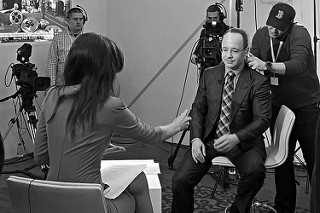
TV Leaders Interview Tips 26554989678_ff03a10665_n Media training can make the difference between a successful interview and a disastrous one.


With proper coaching, the right messaging and some practice responding to challenging questions, leaders will have the tools they need for a successful interview and the confidence to pull it off.

If the interview is a high profile one, or you have concerns that it may be hostile, or the leader seems to be having difficulty delivering key messages and you sense he/she is not ready for the interview, you may want to consider retaining a media training expert from outside the organization to help.

One final thought: Now days even a local interview in a small market, or an Internet radio interview with a tiny audience, can go viral. Social media has been a game-changer and can broadcast mistakes all over the world instantly. Small doesn’t necessarily mean safe when it comes to interviews, so the best approach is to devote the time and resources needed to make sure leaders doing interviews are prepared, confident and effective.

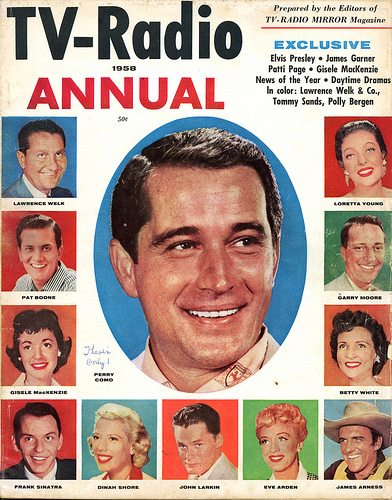
photo credit: BudCat14/Ross TV-Radio ANNUAL (1958) – Perry Como via photopin (license)

photo credit: muddy_lens interview via photopin (license)

Crisis Management: Don’t Close the Door on Your Organization’s Fire

One of my friends when I was growing up in the countryside of Indiana was a boy named Billy, who lived a few houses down the street. Billy was a nice kid but not the sharpest tool in the shed when it came to common sense.

We were both around ten years old when “the incident” occurred: While playing with matches in his bedroom, Billy set the window curtains on fire. He tried putting the fire out, but the flames quickly spread. Billy was so overwhelmed by the situation that he walked out of his room, closed the door and started watching TV in the living room. Really, that’s exactly what he did.

For a few minutes, he didn’t have to deal with the awful reality of what he had done, and he was able to go about life as usual. 

Fire 25868555938_537ce59406

However, it wasn’t long before the entire house was engulfed in flames. Fortunately he and his family escaped, but the house burned to the ground. I still remember hearing the sirens and watching flames shoot out of their house as firemen tried in vain to save it.

Now I understand why my mother encouraged me to make some new friends.

Billy never talked much about “the incident,” so I can’t say for sure what was going through his mind. But I suspect when the fire started in his bedroom, he was afraid he’d get in trouble for playing with matches and thought he could handle it. After all, it was just a little flame at the end of a match—at least, at first. That was MISTAKE #1.

When he realized he couldn’t put the fire out, Billy apparently became so overwhelmed with what he’d done that he convinced himself he could just close the door on the fire and it would magically go away. That was MISTAKE #2.

When I tell this story in my crisis communications seminar, people are amazed at such irresponsible behavior, and rightfully so. Billy should have known better—a raging fire doesn’t extinguish itself by shutting the door on it.

Yet, many organizations with intelligent, well-educated leaders often take the same approach to dealing with a crisis in their organization.

Rather than face reality, they try to ignore the crisis or put a lid on it.

More often than not, the crisis grows and becomes consuming, and in the process devours time and resources. Sometimes the organization’s reputation is severely harmed, and out of the ashes investigations suddenly appear.

It’s not unusual for negative publicity and intense scrutiny from the outside, which often occur during a crisis, to be accompanied by a creeping sense of panic over loss of control of the situation and concern about what might happen next.

Sometimes a crisis is created by an opposing special-interest group that wants to stir up trouble and put the organization on the defensive. With the advantage of surprise, the group then continues to pour kerosene on the fire it has set. If the organization is caught off guard, it may be forced to divert valuable resources to fight the fire.

More times than not the result is a siege mentality and short-term focus among senior management, which only makes the situation worse.

Facing reality and engaging the crisis in its early stages will make the situation more manageable and less damaging.

When a crisis strikes, those charged with managing communications should have three primary objectives:

  1. Maintain control of the message
  2. Minimize damage
  3. Achieve accurate and balanced coverage through the news media and Internet

One of the best ways to help maintain control and minimize damage when a crisis strikes is to have a flexible crisis management plan in place.

The plan should:

  • Contemplate the types of crises that could occur
  • Set forth policies to deal with them
  • Identify all audiences and the best ways to communicate with them
  • Have a pre-selected crisis management team in place
  • Establish a system for communicating accurate information quickly and effectively

The only thing worse than not having a crisis plan is having one that is not communicated, reviewed or tested by those who ultimately will have to implement it.

photo credit: nrg_crisis Aglow via photopin (license)

Ad Agencies: What Publicity Opportunities Are You Missing for the New Year?

New Years Blog Post 39308187491_5087e48ec3

My first job in public relations was with an international nonprofit organization. I was blessed to have a terrific mentor—a former newspaper editor—who took me under his wing and really taught me how to write for reporters, evaluate news like they do and develop effective working with them.

We had a small staff and typically were overwhelmed with requests and things to do; frequently, we were putting out fires. We did very little actual media pitching, except for some of the large events we held.

At the time, my idea of media relations was when the phone rang we answered it, and if it was a reporter calling we did our best to be helpful.

When I went to work for a large PR firm, I was immediately introduced to the concept of generating publicity for our clients by coming up with ideas and angles for what would hopefully be positive coverage.

And, by the way, the clients expected ongoing coverage, so we sometimes had to be creative in coming up with story ideas and new angles. 

As you think about publicity opportunities for 2018, the following are some topics to keep your agency in the news:

  • Commentary about marketing trends/current issues
  • Sponsorships
  • Community involvement
  • Events
  • New clients, employees, awards, publications
  • New services, office expansion, etc.
  • Mentoring programs
  • Pro bono work
  • Guest columns in the local newspaper or business journal
  • Articles in relevant industry publications
  • Human interest stories about employees or clients (unusual hobbies, their community involvement, humanitarian work, etc.)

To expand on that last point about human interest stories, one of my favorites was an article our local paper ran about a real estate agent in the Nashville area who gives a portion of his commission for every house sold to sponsor impoverished children in developing countries. At the time the story was published, he was supporting 53 children in 19 countries.

Sometimes feature stories like this get overlooked internally, but they have great potential to build a brand.

Not only did this story generate positive publicity for the real estate agent, but it also was a boost for his company’s image. If I were looking to buy or sell a house, he’s someone I’d like to do business with because he’s a generous person who gives back to those less fortunate.

Goodwill like this is hard to quantify, but it makes a lasting impression in a way that no other marketing tool can replicate.

photo credit: KorneelPhotography 2018 via photopin (license)

Storytelling Is a Powerful Tool for Ad Agency PR

Several months ago, I was part of a marketing team that helped a client cast a vision for “what could be” if granted a highly sought-after lease of 50+ acres of city-owned land to expansion its operations. Millions of dollars were at stake.

Over a period of several months, we developed a communications strategy and materials–including a powerful video–which told the client’s story in a way designed to elicit an emotional response and a strong sense of community, resulting in widespread support for the project.

Our strategy was to focus on telling rather than selling. Last month the city granted our client the lease, in large part because of our ability to articulate the vision and the many benefits the community would gain as the vision became reality.

As an article in Forbes points out, “In today’s age of brand experience, it seems that emotional engagement is proving to be more and more critical to achieving winning results, and effective storytelling is at the heart of this movement.”

Storytelling for Ad Ageny PR 25063279476_545c977e26

Storytelling is certainly at the heart of Kickstarter, the world’s largest funding platform for creative projects. According to the company’s website, more than 10 million people, from every continent on earth, have backed a Kickstarter project. Artists, filmmakers, designers, developers and creators are required to tell their stories through a video that explains what they are doing and why it matters.

“Today, one of the biggest corporate buzzwords is ‘storytelling.’ Marketers are obsessed with storytelling,” writes Shane Snow, chief content officer at Contently, a New York company that connects freelance journalists with corporate assignments.

In an opinion article on HubSpot, he describes storytelling as “a timeless skill” and claims, “As the majority of corporations start thinking of themselves as publishers, the defining characteristic among the successful ones will be the ability to not just spew content, but to craft compelling stories.”

I think he’s right. When it comes to engaging target audiences, building brand loyalty and differentiating an organization from competitors, nothing beats the ability to artfully tell a story.

You may forget facts and statistics, but a good story stays with you.

A memorable story will differentiate your agency from the competition, just as finding compelling stories about your clients will help them position their organizations and stand out from the crowd.

The reason storytelling is so powerful is because it enables us to uniquely connect with specific audiences.

When it comes to new business for agencies, storytelling can make or break a deal. It can make you memorable or easy to forget.

Want to win more new business? Take an honest look at how well your agency is engaging prospects with compelling stories vs. selling your services and experience.

photo credit: Lester Public Library World Storytelling Day via photopin (license)

Crisis Management, NFL Style

Everywhere you look these days the NFL is dominating conversations, but not for the usual reasons. The sight of players kneeling during the national anthem has become the focal point of games, rather than the games themselves. A few teams have tried to avoid the controversy altogether by remaining in their locker rooms until after the anthem.
NFL Photo 2 5799418921_53ea7a4c40

At first, only a handful of players chose to kneel rather than stand for our flag and anthem. As of last week, however, the number of kneeling players exceeded 200, representing nearly a quarter of the league. In London, the same players who took a knee for the anthem stood when “God Save the Queen” was played.

Since then, scores of fans have expressed outrage, professional football ratings have dropped, one sponsor has pulled ads and DirecTV has started allowing some refunds for viewers upset with the anthem protests.

Ironically the flag and national anthem—which traditionally have united us as Americans—are now dividing us, thanks to political correctness running amok at the NFL.

Whether its leadership realizes it or not, the NFL is in a crisis mode, and so far its response has been less than stellar. In fact, the league is exhibiting symptoms of a seize mentality, which can be downright toxic in a crisis.

A recent poll found that nearly two-thirds of Americans believe players should stand and be respectful during the anthem, yet the NFL continues to defy its fans. They also are ignoring their own games operations manual, which states: “The National Anthem must be played prior to every NFL game, and all players must be on the sideline for the National Anthem. During the National Anthem, players on the field and bench area should stand at attention, face the flag, hold helmets in their left hand, and refrain from talking.”NFL Photo 3 Flag 6343256929_547261ae8b.jpgIgnoring the wishes of people who finance your business is not a winning strategy, nor is selectively enforcing rules and basically telling your customers that you don’t care what they think or how much they are offended them by your actions.

With the way things are going, I can’t help but wonder how long it will be until those of us who stand for the national anthem are accused of being racists and opposing social justice.

The NFL is big, really big – but not as big as Americans’ love of country and respect for our flag, military and police. The NFL cannot win by putting fans in the place whey must choose between loyalty to country or to professional football.

Taya Kyle said it well in an open letter to the NFL: “Your desire to focus on division and anger has shattered what many people loved most about the sport. Football was really a metaphor for our ideal world — different backgrounds, talents, political beliefs and histories as one big team with one big goal — to do well, to win, TOGETHER. You are asking us to abandon what we loved about togetherness and make choices of division.”

Some of the players and pundits now claim the protests are misunderstood and not intended to show disrespect to America. So why are they kneeling? The reasons range from protesting President Trump to social injustice to racism to police brutality.

Which raises an interesting question: Are the NFL players, coaches and owners in agreement about what they are protesting?

Colin Kaepernick, who started all this, has been very clear about his reasons for kneeling during the anthem: “I am not going to stand up to show pride in a flag for a country that oppresses black people and people of color.”

Contrary to what Mr. Kaepernick seems to think, most Americans are not racists. Our justice system is not perfect—nor will it ever be—but we are not a national of oppressors. If that were the case, why would so many people from all over the world want to come here?

The NFL owes us an explanation about what, exactly, has to change to make these protestors want to stand up for their country again. What is the end game? We really don’t know because all we are getting is mixed messages from teams and players, with an NFL unity ad airing in the midst of some of the most divisive actions imaginable.

What we do know is that allowing players to disrespect our country sets a very poor example for young people, and basically communicates to them that it’s okay to trash our flag and anthem, as well as the military and police who protect us.

For me, and I suspect millions of others, the NFL will never again have the same appeal. I started my boycott of NFL games last week because, as one season ticket fan put it, “I’m just sick of the whole thing.” A lot of us can relate to that sentiment.

The problems of social injustice and racism are not going to be solved by players kneeling during the national anthem. While we should always strive to improve in those areas, as a Christian I believe that only Jesus can change hearts in a way that causes prejudiced people to act justly and love others unconditionally.

Eric Reid, a teammate of Colin Kaepernick, said his faith “moved me to take action,” and that he and Mr. Kaepernick decided to kneel to “make a more powerful and positive impact on the social justice movement.” He went on the lament in a New York Times article, “It baffles me that our protest is still being misconstrued as disrespectful to the country, flag and military personnel.”

Mr. Reid, if you really want to do something positive that won’t be misconstrued, I have a suggestion for you and the other NFL players, coaches and owners of faith: After the anthem is played, gather together to join hands, drop to both knees and say a brief prayer for God to unify our nation. That could be the start of something very powerful indeed.

photo credit: furanda Football via photopin (license)

photo credit: NYCMarines New York Jets Military Appreciation Ceremony, 2011 via photopin (license)


How Ad Agency PR Can Generate New Business

Having worked in corporation communications, journalism and for advertising & PR agencies in Chicago and Nashville, I’ve had the opportunity to see public relations in action from a variety of perspectives. It’s been my experience that a lot of agencies like to use public relations tactics to create awareness, but few use PR as a strategic tool for new business.

Helping agencies harness the power of PR and use it strategically for new business has been an interest of mine for several years. I’ve shared my thoughts in a variety of forums about ways in which ad agencies can develop a PR plan that not only generates awareness, but also compliments their new business initiatives and enhances new business opportunities.

Several months ago, I was honored when a representative from HubSpot contacted me to ask if I would be interested in being part of the company’s Agency Expert Webinar Series.

HubSpot is a developer and marketer of software products for inbound marketing and sales, with 34,000 customers in 90 countries and 3,400 agency partners.

How to Craft an Agency PR Plan That Will Drive New Biz SS

 My September 13 webinar discussed the building blocks of creating a performance-based public relations plan for an agency. It also explained how the strategic use of PR can enhance awareness and credibility; distinguish an agency from its competitors; and make it easier for decision makers to find agencies that have expertise in the area they are seeking.

Here’s the link to my session about “How to Craft an Agency PR Plan that Will Drive New Business.” I appreciate HubSpot giving me the opportunity to be part of this series.