Good and Bad News for Reporters: Today, Anyone Can Be a Journalist

Large Group of Reporters with Cameras in Central Park Image medium_1805323291

While attending the 2012 Digital Summit in Atlanta a couple months ago, I heard one of the speakers make the point that the future of journalism is participatory.

With the rise of technology, such as cell phones that are able to record events, everyday citizens can capture news as it happens and distribute it instantly via the Internet. Think about how many times you’ve seen images on the news recently—from uprisings in the Middle East to tornadoes tearing through the heartland—that are attributed to a non-journalist who was at the right place at the right time.

So, why would having all those extra eyes, ears and equipment to capture events be bad news for some media outlets?

How about when a national reporter sets out to intentionally distort what someone says through deceptive editing, only to have the entire context made available by John Q. Citizen with a recording device.

Now, there are ways to hold dishonest reporters accountable, which no doubt is very disturbing to people like Andrea Mitchell of NBC.

After selectively editing a speech by Mitt Romney in an attempt to portray him as out of touch, a smirking Ms. Mitchell mockingly said, “It’s amazing.” But her smirk quickly disappeared when a blog site noted that NBC had doctored the video.

After exposing what she and her editing crew tried to pull off, the post quickly went viral, putting the network’s spin doctors in high gear. It turns out the joke was on Ms. Mitchell because she’d been caught in a blatant deception.

It’s amazing, all right, that a once-respected news outlet like NBC would stoop to something like this. However, it’s hardly an isolated case.

In March, NBC was caught editing the audio of George Zimmerman’s 911 call in a way that falsely portrayed him as racially profiling Trayvon Martin. Last August MSNBC’s Ed Schultz played an edited clip of then-presidential candidate Rick Perry making it sound like he was taking a racial shot at President Obama.

And these people expect us to trust them?

While this sort of behavior has been going on for a long time among some segments of the news media, the culture of “anything goes” seems to be getting worse.

In its heyday “60 Minutes” was notorious for the footage it left “on the floor” to shape a story in the way its producer wanted. Some of the savvier companies that were subject to a “60 Minutes” investigation would hire their own videographers to tape every interview of executives as a way of trying to keep Mike Wallace and Co. honest, but before the Internet was around it was a tough slug to get the word out if you were the victim of a “60 Minutes” hit piece.

Now, reporters are being held accountable by everyday citizens who can expose their shenanigans to the world with the touch of a button.

That may be bad news for unethical reporters, but it sure is good news for the rest of us.

Don Beehler provides public relations consulting services to advertising agencies and businesses.

photo credit: Ernst Moeksis via photopin cc

Increase Publicity Opportunities by Segmenting Your Pitch

Maximizing publicity opportunities involves more than just widely distributing a news release or pitching the same story idea to multiple media outlets.

To get the most PR mileage, look for ways to expand your story’s reach to a variety of audiences by identify angles that will appeal to narrower segments.

When I started my own agency, one of my first clients was a lady who was launching a residential steel framing business. Although steel framing for homes had been around for many years in some parts of the country, it was a new concept for our area. In fact, hers was the first company of its kind in Tennessee.

Red & White Target with Arrows Image medium_2377844553

While the basic facts of the story were the same, I was able to generate some excellent media coverage by segmenting my pitches and emphasizing different aspects to different media outlets:

  • To our local business journal, I emphasized the entrepreneurial side
  • To our local daily paper, I got a front-page feature story about alternative materials for new houses
  • To HGTV, I focused on the growing trend of having steel framing for homes, and the benefits of steel over wood framing
  • To women’s publications, I focused on a female entering the construction business, which traditionally has been dominated by men
  • To my client’s hometown paper, which also ran a front-page story, I pitched a “local lady makes good” angle and tied it to an award she recently won

As I noted in my previous post, the more you can provide reporters with relevant, factual information that is meaningful and targeted to their audience, the more likely you are to get coverage.  Giving reporters an appropriately segmented pitch is one way to make their jobs easier and broaden exposure of your client or business.

Don Beehler provides public relations consulting services to advertising agencies and businesses.

photo credit: Bogdan Suditu via photopin cc

Ten Tips to Help Ad Agencies and Companies Generate Publicity

101010 Image large_5063710551

Having worked on the agency, journalism and corporate communications side, I’ve viewed public relations from a variety of perspectives. I’ve also experienced first-hand how the strategic use of PR can help small and mid-sized agencies and companies—even one-person operations—level the playing field with larger competitors.

The key to getting publicity is pitching the right story to the right person at the right time.

Before you attempt to get a reporter’s attention, you need to understand how the news media operate and what they want. Here are 10 suggestions to help you do just that and make your publicity efforts successful:

#1: Define your media focus.

  • Limit your pitches to only those outlets that directly serve your target audience.

#2: Get to the right person at each media outlet.

  • Whether you’re dealing with your local paper or The Wall Street Journal, it’s important to take the time to find out which person covers the particular area you are interested in targeting.

#3: Research a reporter’s previous stories before making contact.

  • Learn all you can about what the reporter covers, his or her interests and reporting style.

#4: Don’t waste their time or mislead them.

  • Reporters are busy people who work under constant pressure and deadlines. When pitching a story, get right to the point. The most important things you can tell a reporter about your story are who will care about it and why.

#5: Respect their deadlines.

  • When contacting a reporter, I always first ask if he or she is on deadline. If so, I then ask when would be a convenient time to share a story idea. If you’re contacted by a reporter on deadline, do everything you can to respond within that deadline; otherwise, you may miss out on a golden opportunity. Even worse, if you don’t respond promptly, the reporter may contact and quote a competitor.

#6: Think and pitch like a reporter.

  • When I was on the editorial side of a heath care magazine, I never ceased to be amazed at some of the obviously inappropriate pitches PR people sent my way. It was pretty easy to tell who had taken time to read our magazine and understand our audience and the types of stories we covered, and who had taken a shotgun approach. When the time comes to make your pitch, be sure you not only think like a reporter, but that you write and speak like one as well. Don’t advertise or editorialize your story idea (reporters are very sensitive to disguised advertising). Whether you write your pitch or give it verbally, be as objective as possible by emphasizing the news or human interest aspect, or your expertise to comment and provide insights.

#7: Make their jobs easier.

  • The more you can provide reporters with relevant, factual information that is meaningful and targeted to their audience, the more likely they are to take you seriously and provide coverage. Plus, if they know that you know their audiences, areas of coverage and deadlines, when they see a pitch from you in the future, they’ll realize you’re credible and are more likely to give you serious consideration.

#8: Know what makes a good news story.

  • Put yourself in the reporter’s shoes and ask: “Would this story be interesting to my audience?” If you can’t honestly answer yes, you need to rethink your pitch.

#9: Give them the first shot at a story whenever possible.

  • Reporters like to be the first one to cover a news story, and not just report the same news that others have.

#10: Make them look good in front of their bosses.

  • The news media is a very competitive business, and more and more media outlets are taking a hard look at the level of interest in reporters’ stories. Like any other profession, reporters enjoy getting recognition and praise for their stories – and success means job security.

Don Beehler provides public relations consulting services to advertising agencies and businesses.

photo credit: woodleywonderworks via photopin cc

Social Office Suite Is a Helpful Tool for Ad Agencies and Small Companies

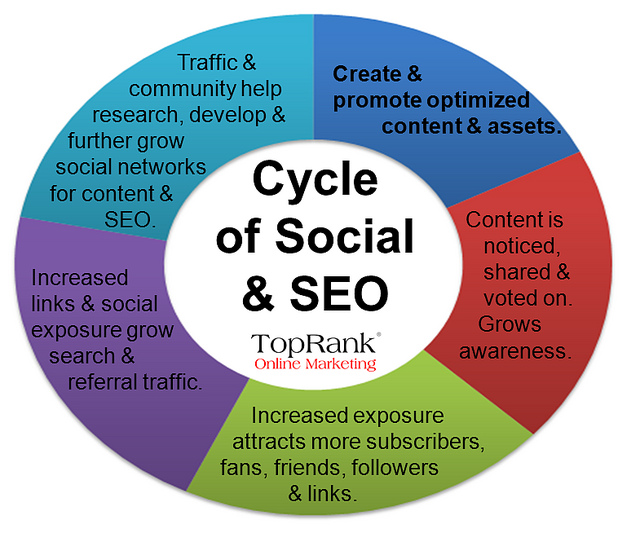
Cycle of Social & SEO Image medium_4618683399

Social Office Suite (SOS) is a good option for agencies and companies that know the importance of building or monitoring their brands and of generating leads, but find it difficult to consistently invest enough time in social media to make their efforts pay off.

SOS helps organizations identify relevant conversations, including those about competitors, on social media networks. It provides a single dashboard to post, listen to and measure activity in a short period of time each day. Of course, companies can do these same activities themselves, but to do it right takes time and resources that often could be better utilized in other areas.

SOS gives small- and medium-sized businesses the ability to operate and complete with much larger agencies and companies at a fraction of the cost. It’s worth a look: http://socialofficesuite.com/SiteSos/Home.aspx

Don Beehler provides public relations consulting services to advertising agencies and businesses.

photo credit: toprankonlinemarketing via photopin cc

What Ten Years Running My Own PR Agency Has Taught Me

Black & Silver Diamond Images medium_4420452321

Yesterday was the 10th anniversary of my PR consulting business. When I left my VP position with an ad agency to strike out on my own a decade ago, it was a grand experiment that turned out far better than I ever could have imagined.

So what I have learned in the past 10 years? For one thing, I had no idea I would enjoy having my own business so much. Unlike many entrepreneurs I’ve known, I never had a burning desire to be self-employed. But once I got a taste of running my own business, I discovered it was exciting and energizing having my own clients and handling their communication needs. If a problem or issue arises—and there have been very few—I’m able to solve it directly with the client.

Another thing I’ve learned—or had confirmed, really—is that with technology, you can work from just about anywhere and still provide top-notch service to clients. A laptop, e-mail, a mobile phone and Social Media tools are about the only things you really need.

I’ve learned also the tremendous value of referrals. With only a couple of exceptions, my business has all come from either word-of-mouth or from having one division of a company see what I’d done for another division and contact me.

I can’t tell you how many times I’ve picked up the phone and someone would say something along the lines of, “I’m Bill Smith and so-and-so gave me your name . . . .”

Which leads me to another observation: You can’t beat starting out with a huge piece of business coming through the door. That’s exactly what happened to me. Initially I expected my first year to be a struggle and my goal was simply to make enough money to survive until I got established. Having a large piece of retainer business from day one gave me a roaring start and a strong foundation upon which to build for future success. I was exceedingly fortunate and blessed.

A friend and colleague who had launched his own ad agency a few years prior and seen it grow significantly gave me this piece of advice when I first got started: Be prepared for success. It was great advice, and he was absolutely right. If you’re going to take the plunge, focus on being successful, not hoping you’ll be successful.

One thing that I thought I’d miss more than I have is the opportunity to bounce things off agency peers. Turns out that several of them have their own agencies now, and we share advice and resources with each other as needed. In fact, I’ve collaborated with a number of my former agency colleagues on business assignments when they needed help, and I’ve hired some of them to provide services for my clients when I’ve been swamped.

I wouldn’t want to leave the impression that there haven’t been some bumps along the way, and my business certainly is not immune to downswings in the economy. But having my own firm has been a blessing far beyond what I envisioned. It’s been a great ride, and I’m looking forward to seeing what the next 10 years have in store.

Don Beehler provides public relations consulting services to advertising agencies and businesses.

photo credit: Patrick Hoesly via photopin cc

Don’t Try to Fix Broken Communication Until You Have Completed a Communications Audit

Field Observations Notebook Image large_5014162053

Several days ago, I finished a communications audit for a client that has customers throughout Tennessee. If you’re not family with a communications audit, it’s simply a management tool that helps an organization gauge how effectively it’s communicating with various audiences.

While people may think that others understand and accept their messages, we are often unaware of how the messages we send are received, understood or accepted. An audit helps identify strengths and weaknesses in an organization’s communications, as well as perceptions that exist and barriers which prevent or inhibit effective communication. An audit also flags areas that areas that may require more in-depth, quantitative research.

When I do an audit, I always include:

•       A review of past methods and vehicles used to communicate with various audiences.

•       The collection and analysis of information about perceptions individuals have about the organization; what they want and need to know; how they prefer to be reached; and the extent to which organizational communication is clear, consistent and relevant.

•       An analysis of what would make communications more effective in the future, along with specific recommendations.

In addition to reviewing this organization’s communications materials and vehicles, I interviewed employees as well as customers from one side of the state to the other to determine perceptions and how communication could be improved. By comparing employees’ and customers’ answers about key issues and perceptions, I was able to identify common concerns and trends, as well as to see where gaps exist between what they think about a particular matter.

As it turned out, there were three reoccurring themes I heard over and over again. All three are intertwined, and the good news is that there are practical ways in which they can be greatly improved, though they won’t be fixed overnight and they will require a financial investment.

It’s hard to fix something if you don’t know exactly where  it’s broken. A communications audit helps answer that question and provides a roadmap to get an organization’s communications back on track.

Don Beehler provides public relations consulting services to advertising agencies and businesses.

photo credit: Calsidyrose via photopin cc

The Best WordPress Plugins for Boosting SEO

Search Engine Optimization (SEO) is a vital part of helping prospective clients or customers find you. If you’re not satisfied with the level of traffic your agency or organization generates, check out this guest post from Laura Backes, a freelance writer whose work includes Internet and technology topics. She has some practical, easy-to-implement suggestions for boosting SEO through free WordPress plugins. Thanks, Laura, for this helpful post:

SEO, or Search Engine Optimization, is something that every blogger knows that they probably should be maximizing, but not everyone knows exactly how to go about doing so. Boosting your SEO means generating greater success from your content and increasing your website’s traffic, so making sure that you’re getting the most out of your blog’s SEO is clearly important. But wouldn’t it be nice if you could sit back and let someone else handle your SEO for you? Luckily, you can. There are several different WordPress plugins that you can download for free for your blog that will do just that.

1.      SEO Rank Reporter

Getting all your ducks in a row with SEO is important, but if you can’t monitor whether it’s being successful or not, then what good is it? With SEO Rank Reporter you are given a report every three days that updates you on how certain keywords that you have identified as important for your blog are ranking in the search engines.

2.      Headspace2 SEO

This is an all-in-one program that really does it all in terms of SEO. The plugin manages your meta-data and makes it easy to understand and implement. It also has a wide range of modules that help you create the site that you want. You also can go in and tag posts and create custom titles and descriptions, both of which will help increase your blog’s page ranking in the major search engines.

3.      Google XML Sitemaps

If you’re trying to increase your blog’s visibility within the major search engines, then you need this plugin. It creates a sitemap for your blog that makes it easier for search engines to crawl your website and index it, helping increase your blog’s traffic.

4.      SEO Content Control

Ever wondered which content on your site could be beefed up to get more SEO bang for your buck? SEO Content Control helps to identify weak content that is holding your blog back from its full potential and helps you clean up your blog, making it more appealing to your blog readers.

5.      SEO Smart Links

SEO Smart Links will generate automatically linked keywords within your blog posts, comments and other content on your website with common content in your blog to help you maximize on your SEO. You can also create custom keywords and create links, among a long list of other things geared at improving your blog’s SEO. It helps make managing your SEO simple.

These are only a few of the many plugins that are designed to help you simply enhance the SEO of your blog. Since SEO is directly linked to the success of a blog, it’s important to take on all the help you can get—something that’s easily done just by downloading these plugins!

Author Bio: This is a guest post from Laura Backes. She enjoys writing about all kinds of subjects and also topics related to internet service in my area.  You can reach her at: laurabackes8 @ gmail.com.

Don’t Miss Publicity Opportunities for Your Agency

Collage of Articles Image large_3214009736

In dealing with the tyranny of the urgent, ad agency can easily overlook publicity opportunities just waiting to be told. These opportunities are valuable in generating awareness and, in some cases, helping to establish or reinforce expertise in particular areas.

Here are my Top 20 Topics to consider:

  1. Awards
  2. New clients/customers
  3. New employees
  4. Employee promotions
  5. Human interest stories about employees
  6. Community involvement
  7. Survey results
  8. Introducing a new product or service
  9. Expert commentary that address newsworthy topics/trends
  10. Appointments to boards
  11. Publications (articles, books, etc.)
  12. New offices/geographical expansion
  13. Mergers/strategic alliances
  14. Trends, projections, forecasts
  15. Speeches
  16. Sponsorships
  17. Mentoring programs
  18. Pro bono work
  19. Guest columns
  20. Case studies that could become feature stories

One of my favorite examples of a good human interest story involves a real estate agent named Alex Delgado.

“Once I got into real estate, I got really successful really fast, and I had all this money I didn’t know what to do with,” he told our local paper. Rather than pamper himself, Alex looked to the needs of others by giving a portion of his commission for every house sold to sponsor impoverished children in developing countries.

At the time the story was published, he was supporting 53 children in 19 countries.

The article quoted from letters he received from his sponsor children, who described the ways in which his involvement improved their lives. One girl from India, who signed her letter “loving daughter,” explained how his money provides her family with food and soap.

A little boy who lost both parents to an accident, and later his younger sister, wrote, “Now I am alone. I thank God for getting you as my sponsor.”

If I were looking to buy or sell a house, Alex Delgado is the first person I’d call. And I imagine a lot of other people felt the same way after reading this story. It obviously was good publicity for his company as well.

What stories like this are in your agency or client roster that ought to be shared?

Don Beehler provides public relations consulting services to advertising agencies and businesses.

photo credit: David Boyle via photopin cc

How PR Can Bring “Awareness Plus” to Ad Agencies

Many advertising agencies use public relations to generate awareness, but in my experience few use it as a strategic tool to drive new business.

While generating awareness is valuable, PR can do so much more if it works hand-in-hand with an agency’s new business plan. Agencies that utilize PR solely for awareness purposes are shortchanging the value it can bring them.

Public relations can help agencies drive sales, get discovered by prospects and retain existing clients. I like to think of this approach as “Awareness Plus.”

I use the term “Awareness Plus” because if utilized in a targeted, strategic manner, PR will give your agency the benefits of awareness plus so much more.

On February 8, I’ll discuss the building blocks for creating a performance-based PR plan for agencies at a Mirren webinar titled, “How to Craft a PR Plan that Will Drive New Business.”

For more information about the webinar or to register, visit http://www.mirren.org/workshops/130/77-How-to-Craft-a-PR-Plan-that-Will-Drive-New-Business/

Don Beehler provides public relations consulting services to advertising agencies and businesses.

Cruise Ship Flunks Crisis Management 101

Lego Ship Image large__9408660671

Costa Concordia, the luxury cruise ship that ran aground off the coast of Italy a few days ago, has created first-rate crisis not only for the ship’s owners, but also for the entire industry.

If the ship had a crisis plan to handle such an emergency, it sure didn’t work very well.

The panic and chaos that ensured when Costa Concordia began to turn on its side was exacerbated by a crew that seemed unsure of what to do. News media reports have now surfaced that the ship’s captain—who as of this writing is behind bars—waited more than an hour after the vessel hit a rock to issue an evacuation order.

Frustrated by the captain’s inaction, some crew members began helping terrified passengers get to lifeboats. However, a number of the crew reportedly left before all the passengers were safely evacuated. Even the captain allegedly abandoned ship before hundreds of his passengers escaped.  Survivors have described the incident as “like something out of the Titanic.”

One would naturally assume that the chances of a disaster like this taking place in a modern ship cruising along in good weather near shore are pretty small, but one also would assume that should an accident occur, the captain and crew would be well trained and prepared to handle it and make sure passengers got off safely before fleeing for their own lives. Now, however, confidence in the entire industry is shaken.

Henry Kissinger once observed that “A problem ignored is a crisis invited.”

The problem for Costa Cruises, which owns the Costa Concordia, started long before the ship capsized. A thorough crisis plan and regular disaster drills for the crew would likely have resulted in more decisive action and an orderly evacuation, which may have saved lives and prevented injuries.  A captain who failed to perform his duties due to incompetence, complacency or being incapacitated should have been one of crisis scenarios.

In fairness to Costa Cruises, it may have had a crisis plan and may also have routinely practiced various scenarios with crew members. But clearly the plan was inadequate and flawed because something went terribly wrong.

The only thing worse than not having a crisis plan is having one that is not communicated, reviewed or tested by those who ultimately will have to implement it.

You don’t have to own a luxury ship to need a crisis plan. Every business and agency, even small ones, should have a what-if plan that is regularly reviewed and updated. For example, if a hurricane, earthquake, tornado or fire wiped out your office building, would you have a back-up plan to minimize disruptions to your employees, clients or customers?

If you don’t have a plan to deal with these and other emergency situations, I recommend you take action rather than sitting back and hoping for the best. Get started on a crisis management plan this month—and when you’re finished, make sure your plan is communicated to employees so that know what to do and how to respond if a disaster strikes.

Don Beehler provides public relations consulting services to advertising agencies and businesses.

photo credit: pasukaru76 via photopin cc