Ad Agency PR Best Practice: Put the Story on the Top

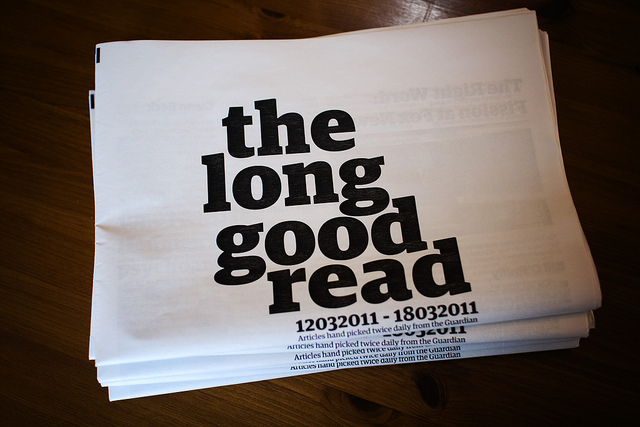
Newspaper Bundle – Story on Top Image medium_2259557436

One of my former agency colleagues, a veteran newspaper reporter, used to have a sign on his desk that said, “Put the Story on the Top.”

In other words, when writing a “hard new” story, state the facts up front and get to the main point right away.

Great advice, and something we all need to keep in mind as we write our news releases. Sure, it can be tempting to write two or three paragraphs of introduction before getting to the main topic, but it’s not the way to write a professional news story.

For one thing, it’s easier for people to remember the gist of the story if you first summarize it and then add details. If they only read the first paragraph, would they know the basic essentials? If not, you need to take a look at revising your release.

Another reason is that many people in fact don’t read much more than the first paragraph or two, so you want to make sure those folks read the most important thing you have to tell them in the first paragraph, followed by the next most important information in the second paragraph, the third most important in the third paragraph, and so forth.

That approach is known in journalism as the inverted pyramid style, and it’s what good reporters and PR pros do when writing a news article. They give you the Who, What, When, Where, Why and How of a story at the very top. No fluff, puffery or promotional flair – just the facts, please. Otherwise, you’ll immediately lose credibility with the reporters and editors you’re trying to reach.

Feature stories are different, because they tend to focus on matters that are interesting and entertaining, but not the most pressing issues of the day. Examples include trends, human interest and unusual, off-beat topics. They, too, will contain some basic facts, but those facts are woven into the story. Features are generally more creative and less formal. The lead in a feature is designed to lure readers in, with the writer crafting a compelling narrative that keeps their attention to the very end.

Hard news and feature stories both have a place in telling your agency’s story. Knowing the difference between the two, and how to use each appropriately, is one of the keys to successful ad agency PR.

photo credit: Steve Rhodes via photopin cc

Specialty Books Boost Ad Agency PR

Corazón

One of the best ways to enhance ad agency PR, and also help with new business initiatives, is for an agency principal or specialist to write a book. After being involved in writing or editing several books for clients—as well as helping market them—I’ve come to the conclusion that writing a book may be the easiest part.

Why? Because self-publishing has made it possible for just about anyone to be an author, and as a result there’s been an explosion of new books in recent years.

To stand out, you need a specific audience to target and a plan to reach it.

Here are 10 tips for the person charged with generating publicity for a new agency book:

1. Quality endorsements are important to a book’s success, so get started on approaching influencers well in advance of the book’s actual publication.

2. Conduct a brief media training session to prepare the author for interviews and to answer questions he/she likely will get, and then develop several key messages (talking points) to use in interviews.

3. Create separate social media sites specifically for the book, and link to them from your agency’s website, Facebook, LinkedIn, Google +, Twitter, etc.

4. Develop a customized list of media outlets and blogs you’d like to approach for publicity.

5. Hold a launch event to get the book off to a positive start, create momentum for it and generate some industry buzz.

6. Utilize a paid news service like PRWeb, PR Newswire or Business Wire to get the word out to a large audience of journalists and bloggers, especially targeting those who would be interested in the book’s topic. PRWeb is a personal favorite because it’s very cost effective, yet I’ve gotten great Internet coverage through Google and Yahoo news, trade publications, blogs and various news sites. It provides instant credibility when a journalist does a search on the book and/or author, and page after page of hits surface.

7. Use your agency newsletter, YouTube and other channels to announce the book internally and to clients. And, of course, you’ll want to integrate the book into your new business strategy.

8. After the first wave of launch publicity, write and distribute customized news media pitch letters to each outlet on your list, based on their particular audience and area of coverage.

9. Take the same approach with influential bloggers who reach your target audience and offer to do guest posts on their sites.

10. Identify author speaking opportunities where he/she would have the chance to sell the book. And be sure to take full advantage of places where the author already has connections, such as professional associations and networks.

photo credit: Jonathan Rubio via photopin cc

Know Which Words to Use and Avoid for Ad Agency PR Success

Think

Mark Twain once remarked that “the difference between the right word and the almost right world is the difference between lightening and the lighting bug.”

No where is that more true than in the world of journalism, which has its own particular style of language usage.

Recently I came across an article titled “20 words and phrases that will doom your pitch.” I sure didn’t want that to happen, so I read through the list to identify these “cursed words,” as the article described them.

You can read the list of words the article warns will sabotage your pitches and news release here. If you get as far as the comments section at the end, you’ll see additional words submitted by readers as candidates to add to the banned list.

“The reporters not only ignore these, they hold them up as points of mockery,” said.
Michael Smart, principal for MichaelSMARTPR. He and New York Times technology columnist David Pogue drew up the list of words and phrases that they say undermine a writer’s creditability.

The real problem with these 20 words is that they are more suitable for advertising copy than a news release or pitch letter.

Why is this a big deal?

Because there’s a big difference between the words and phrases used in advertising and journalism. Ad agencies that don’t understand this difference will have a hard time being successful with their publicity efforts or even being taken seriously.

Reporters are very sensitive to attempts to disguise advertising as news or use promotional language to hype a product, service, cause or company. They can sniff these out from a considerable distance, and it’s the quickly way to have your content tossed in the trash or deleted.

To be considered credible by the news media, you have to write your pitch as objectively as possible, emphasizing its news, trend or human interest aspect. Or, if you want to be considered as a source, focus on your expertise to comment on a particular topic and provide insights.

Being familiar with The Associated Press Stylebook will help you use appropriate journalism language and avoid faux pas. Think of it as a pocket language guide you’d want to take with when traveling to another country so that you can converse with locals.

The best way to maximize your chance of landing news media coverage is to write and think like a reporter – and, of course, have a good story to tell.

photo credit: jDevaun via photopin cc

How to Maximize Ad Agency PR Success for New Business

The Long Good Read Article medium_5558653828

You’ve just gotten a great media hit for your agency – now, how can maximize this important third-party validation for new business exposure?

For starters, make sure your clients, employees and other stakeholders get a copy of the article, broadcast interview or Internet story, and invite them to share it with others who may be interested. A handwritten cover note to clients is a nice added touch.

The coverage should also be displayed on your website, and you’ll want to write a post about it on your agency blog with a link to the story.

And, of course, you’ll want to utilize your social media channels to help get the word out by linking to the story.

If you have an agency newsletter, consider reprinting the article in the newsletter (after obtaining the publication’s permission to do so) or at least make mention of it by including highlights of the story. If it’s a radio or TV interview, include a few key quotes as excerpts.

Next, you can further expand your reach by doing a news release about the coverage, especially if it’s in a prominent national news media outlet. Paid online news release distribution services come in very handy in times like this.

And if you’re fortunate enough to get a national hit, be sure to alert your local news media as that may generate another round of publicity, or possibly be included in a future story about your agency.

Framed copies of newspaper and magazine articles are impressive when people are touring your agency, especially if you have a number of them to display along the walls or in a conference room.

And, of course, you’ll want to include media hits as part of your new business pitch to answer the question “Why you should hire us?”

photo credit: Rev Dan Catt via photopin cc

Eight Tips for Ad Agency PR Spokespersons

Microphone Image Facing medium_3241285917

In my previous post, I discussed the traits of highly effective spokespersons. If you have that role at your ad agency, here are a few thoughts from someone who’s been in your shoes:

1. Make sure you have the full support and backing of agency management before saying a word publicly about a particular issue.

2. Always go into an interview or news conference fully prepared. Know the subject matter inside out, and have people practice asking you questions and critiquing your responses.

3. Have a few key points you want to make, and find ways to work them into the conversation.

4. If you don’t know something, say so and offer to get back to the reporter with the answer as soon as possible.

5. Never try to bluff your way through—more likely than not, bluffing will come back to bite you.

6. Never deny the obvious. Sounds like common senses, doesn’t it? But it’s amazing how many people and organizations do that in hopes that things will change just because they deny there’s a problem. Trust me, that won’t work.

7. Record the interview or news conference. That way, if you’re grossly misquoted, you’ll have a way to prove what you actually said.

8. If the situation you’re dealing with could have significant ramifications for your agency and/or a client, get professional outside help. Individual consultants and firms that have experience dealing with news media day in and day out can provide valuable objectivity and expertise, and they’ll help keep you focused, on track and maintaining proper perspective.

And remember, you’re going to make mistakes—just try to make sure they aren’t big ones. IF you misspeak, don’t hesitate to correct yourself immediately or as quickly after the interview as possible.

photo credit: Яick Harris via photopin cc

14 Traits of Highly Effective Ad Agency PR Spokespersons

Multiple Microphones Drawing medium_5538036046

Having served as spokesman for a large international organization as well as for a variety of agency clients, I can attest that it is a challenging job, especially when dealing with hostile reporters who are trying to trip you up or make you look bad.

Being a spokesperson can be a high pressure chore, especially when you’re in the middle of a controversy or crisis. As the face and voice of the agency (or one of your clients), what you say can positively or negatively affect relationships with stakeholders, clients, competitors and other important audiences.

There weren’t any “Spokesperson 101” elective courses when I was in college, and I’d be surprised if there are many today. Absent a specific course on the subject, the best preparation is good media training, but even with such training I’ve found that the art of being an effective spokesperson is best learned through experience.

An important part of any ad agency PR initiative is finding a person well suited for the role of representing your agency to the world. Depending on your agency’s size and delegation of responsibilities, the role of spokesperson likely will go to one of the principals or to the highest-level PR person. (In some cases that person may be both.)

But more important than the person’s specific role in the agency is to possess certain traits. Obviously the person who serves as spokesperson must be knowledgeable about the agency, industry and specific topic at hand, but it takes more than that to be successful. Some things can be learned through experience, but there’s also a certain personality type that thrives in this job.

Here’s my list of 14 “must have” traits for an effective ad agency spokesperson:

1. High integrity; you can trust what this person says
2. Excellent communicator who is clear, concise and articulate
3. Able to reframe an issue in a positive way without sounding contrived
4. Well prepared
5. Likable personality
6. Confident but not cocky
7. Cool under pressure
8. Able to think on his or her feet
9. Not easily rattled
10. Doesn’t get defensive
11. Able to laugh at himself or herself
12. Learns from his or her mistakes
13. Takes criticism well and uses it to improve
14. X factor

The last one, which I’ve called the “X factor,” is something I can’t define—I just know it when I see it. If you think about good spokespeople you’ve observed over the years, you’ll see this X factor in them. Former White House Press Secretary Tony Snow had it. He possessed a sunny disposition and always struck me as someone who was born for that role. The not-so-good ones lack it. You can probably think of some of those folks on your own.

photo credit: opensourceway via photopin cc

13 Ways to Build Ad Agency PR in 2013

Fireworks over Bangkok Image medium_8333497020

If you’re looking to build your ad agency’s reputation this year, here are 13 PR tips for 2013. If your agency is already doing all these things, you’re doing well PR-wise—just keep up the good work this year and make sure you maintain a consistent effort.

If you’re doing some but not all of these things, consider adding the ones you’ve not yet tried and see how, over time, they enhance your visibility and boost your new business efforts.

If your agency is not doing any of these—wow, it’s high time you started taking PR more seriously because you’re likely losing business to competitors who are engaged in these activities.

  1. Fine tune your agency’s messages so that you can convey your expertise clearly and concisely.
  2. Shorten your pitch. In this age where sound bites, e-mail subject lines and Twitter characters dominate, it’s vital to “do more with less” by making your pitch a quick read that immediately gets to the point.
  3. Regularly update your media list. People come and go, and failing to keep up to speed on who is covering your industry can be costly. Resources like Bulldog Reporter and Bacon’s Media Directories not only provide the latest listings of reporters’ contact information and the industries they cover, but they also have valuable insights on each reporter’s preferred method of contact, their deadlines and pet peeves, etc.
  4. Get to know at least one reporter who covers your niche each quarter. That’s just four people this year, which is very manageable but could have a huge payoff. Not sure where to start? Try following the reporter you’re targeting on Twitter, Facebook and/or his or her blog. Not only will you learn a lot about this reporter’s interests, but you’ll also discover opportunities to comment and interact.
  5. Get to know at least one blogger who covers your niche each quarter. Read that person’s blog regularly, comment when you have something worthwhile to add to the conversation, and when the time is right ask for an opportunity to submit a guest post.
  6. Utilize a new channel, such as LinkedIn Answers, to help others seeking information and to position yourself as an expert.
  7. Subscribe to receive daily e-mail updates from Help A Reporter Out (HARO),  BloggerLinkUp and RadioGuestList, and review them each day. These are free resources that bring interview opportunities to you.
  8. Keep an eye out for opportunities to comment about what’s already in the news, such as trends or breaking news. Google Alerts can help you keep on top of news related to your niche, but you must act quickly because the media will soon be on to the next story.
  9. When you see a story about a topic that you could have provided some great insights and commentary, rather than bemoaning the fact that you weren’t included in it, get in touch with the writer, tell him or her how much you liked the story, and then add an insight or two based on your experience. Close your note by offering to be a source for future stories related to the topic and thank the reporter for considering you down the road.
  10. Use one or more paid online news release distribution services like PRWeb to expand your reach and generate buzz. A steady stream of news through these services will draw the attention of reporters and bloggers covering your industry, and also make it easier for prospects to find you.
  11. Create an e-newsletter to comment on trends in the industry, and as you meet reporters and bloggers, ask if they’d like to be added to your mailing list. This keeps you front and center, and may trigger story ideas from those who read it. If nothing else, you’ll stay on their radar as a source when they do stories in your area of expertise.
  12. Tell your agency’s story visually whenever possible. Photo sharing, infographics and visual story telling are growing at an incredible rate. This year it’s estimated that more than 90% of Internet traffic will be video based, and more than 800 million unique users visit YouTube each month. Pinterest is now one of the most popular social networks. Your prospects are there—are you?
  13. Keep your blog current and its content top-notch. (You do have a blog, don’t you? If not, this is the year to start one.) Great content is one of the most important ways you can build a following among your

photo credit: Nik Cyclist via photopin cc

The Hidden Cost of Paid Website Content to Ad Agency PR

Dollars Bills Everywhere Image cmedium_61056391

Last week as I was monitoring coverage of a news release I distributed for a financial services client, I went to a business website that has been on my media list longer than I can remember.

And right toward the top, there was a headline based on the release with a hyperlink to the article. When I clicked on the link, much to my surprise I got a message saying:

This content is exclusive to subscribers.”

My options were to subscribe for a minimum of a year or pay $7.50 to purchase the article. Content that used to be free now came at a price

I hate to sound cheap, but paying $7.50 to access a website article that probably was no more than a page or two when printed out seems a bit high to me. And I really wasn’t excited about subscribing to content that used to not cost me a thing.

But my real concern was that only subscribers could see a story which previously would have been available to anyone with Internet service.

How many business people subscribe to this site? I haven’t a clue. And of that number, how many would be interested in a financial services story and take the time to read it?

What I do know is that the potential audience for my client’s story had been significantly limited.

I understand that the website needs revenue to remain a going concern, but I really wonder if charging for access to articles is something that will come back to bite it.

If I were looking at a place to give a business exclusive for a client, I’d think twice about a news website that charges for access.

It’s true that most newspapers and magazines charge a subscription or individual copy fee, but somehow with online it seems different. A newspaper or magazine I can hold in my hands. (Yes, I’m familiar with Kindle, but in this case I was after an article, not a book.)

From what I’ve read, quite a few people are bulking at paying for website content.

As newspapers and magazines continue to struggle to survive, it will be interesting to see if paying for access to news websites—especially to sites that primarily cover local or regional business news like this one—will be a successful model.

One international survey found that nearly half the respondents would consider paying for online access to a magazine, and a little over 40% for online newspaper content—if they thought the content was worth the price.

That may sound like a good percentage, but as a PR person I’m thinking of the other 50-60% who won’t pay—and therefore will never see a client’s story.

That’s a hidden cost I’m not yet ready to pay.

Don Beehler provides public relations consulting services to advertising agencies and businesses

photo credit: Tracy O via photopin cc

Land Rover, Golf Mag Images large_3657050957

This past week was not a good for print news media.

For starters, a PewResearchCenter poll found that only 29% of Americans surveyed said they read a newspaper the previous day, with only 23%  reading a print version.

The survey also found that Americans still like to read, with 51% saying they enjoy reading a lot, but an increasing number of them are reading papers digitally.

Print magazine and book reading are also down significantly, the poll found.

Then, it was disclosed that “senior figures” at the UKGuardian and Observer newspapers were “seriously discussing” ending print editions and going entirely online.

Finally, Newsweek announced that it will go to an all-digital format, ending a nearly 80-year reign in print. In covering this announcement The Wall Street Journal noted, “The switch will make Newsweek the most widely read magazine yet that has given up on the print media, a signpost of how traditional print news outlets are being battered by an exodus of readers and advertisers to the Web.”

In today’s edition of The Journal, “Sentiment Tracker: A computational analysis of the conversations on social networks,” found only 10% saying they’ll miss the print version. The following are a few snippets of online reaction, as reported by The Journal:

  •  “Congratulations to Newsweek: You are now a blog!”
  • “No one bought the mag. And no one will subscribe for digital membership.”
  • “The problems are deeper than the digital revolution.”
  • “Will all magazines be doing this soon?”

For many of the surviving print publications, these pressures have resulted in reductions of staff and coverage, and in my opinion their overall quality and relevance have suffered.

A print newspaper that once dominated a market now finds itself facing competition from Internet sites that focus on local news, as well as blogs. To make matters even worse, many people are not willing to pay for online news.

For PR people, there’s good and bad news in all this. The bad news is that it’s getting tougher to get stories placed in print publications. But on the positive side, more choices exists for outlets to cover news and feature stories.

A number of years ago I had a medical client in another state that wanted publicity in the local market. One newspaper dominated the entire market. I crafted one good story pitch after another, each of which had a strong local angle—only to find each one rejected by the local paper.

This client did quite a bit of advertising with the local paper, so one day I decided to call the ad rep and see if I could get some insight into why I was having such difficulty getting anyone at the paper to give me the time of day. After sharing my tale of woe, the ad rep replied, “I hear that all the time!”

She went on to disclose a bit of her frustration—as well as the frustration expressed by so many of the local advertisers with whom she was in regular contact—that the editorial staff simply refused to consider ideas from the outside. If the reporters didn’t come up with the idea, it wasn’t worth exploring.

That sort of arrogance, combined with being out of touch with the community the paper served, is one example of why so many people are looking elsewhere for news and information.

Most print newspapers also have an online version these days, but if they aren’t covering stories their customers want to hear about, neither format is going to do very well in the face of increased competition.

Another benefit to the explosion of online for ad agency and small business PR is that much more information is available about the types of stories particular reporters are interested in covering, along with their personal preferences, likes and dislikes. You can learn a lot by reading a reporter’s blog, online archive of stories or by following him/her on Twitter or Facebook.

Of course the reason winners are consumers, because they now have more choices than ever for where and how they get their news. Print reporters would do well to consider that before automatically dismissing story ideas because they didn’t think of them first.

Don Beehler provides public relations consulting services to advertising agencies and businesses.

photo credit: engineroomblog via photopin cc

Decline of Print Media Presents Challenges and Opportunities for Ad Agency PR

Six Ways for Ad Agencies PR to Counter Media Bias

The Big Lies Image medium_7092877427

When I started my PR career in the mid-80s, I believed that most reporters tried to be fair and objective, in spite of their personal feelings. I can no longer say that’s the case.

While media bias has always been an issue that plagued politicians, business leaders, clergy and others, the problem seems to have gotten exponentially worse—to the point where much of the national media in particular have become advocates for a particular worldview, focusing their efforts on shaping news rather than reporting it.

Not surprisingly, a recent Gallup survey found that distrust in the media has hit a new high, “with 60% saying they have little or no trust in the mass media to report the news fully, accurately, and fairly.”

And no wonder—the bias is hard to miss. Rush Limbaugh has frequently played sound bites from one independent media outlet after another repeating the same word or phrase when discussing a person or event, making it embarrassingly clear that there was discussion among these reporters about how to slant their coverage.

There was a time when editors could be shamed into taking corrective action when a reporter’s bias became too obvious, but generating shame is getting harder and harder to do. Many of today’s national reporters and editors have an agenda, and promoting that agenda is far more important to them than practicing integrity in their craft.

The bias in this year’s election campaign has been the worst I’ve ever seen. One of numerous examples I could site was a Republican debate in which George Stefanolopous, out of the blue, raised the issue with Mitt Romney of denying women contraceptives. Romney appeared to be caught off guard and simply indicted that he was not advocating that at all—it hadn’t even been discussed. It was, in fact, a “when did you stop beating your wife” set-up question from the start.

The spin was became “Romney was talking about banning contraceptives,” and the next thing you know there’s a ridiculous and absolutely phony charge of a Republican “War on Women.” But in the world of politics and PR, once you’re on the defensive with such a volatile issue it’s hard to recover quickly. It’s a good example of how fundamentally deceptive and dishonest the news media can be, knowingly framing an issue in a manner that has no grounding in reality.

Another less obvious bias is in choosing what to report and emphasize, and what to downplay or ignore altogether. But that’s a topic for another post.

Conservative blogs, The Wall Street Journal and talk radio help balance the liberal bias of national print outlets and networks. In my opinion, FOX is the most fair and even-handed TV network in terms of presenting both sides impartially. Sure, FOX has plenty of conservative commentators, along with quite a few liberal commentators, and viewers  know where they’re coming from. But when it’s time to report news rather than comment on it, FOX does a pretty good job overall. Not perfect, mind you, but it’s the only national TV news I trust.

Media bias can be just as big a problem for ad agencies and their clients, as well as for businesses of all sizes. So how should a PR person representing an agency or business navigate in this environment, especially when representing an issue or cause that runs counter to the philosophy of the dominant media?

There are no easy answers to dealing with media bias, but here are six suggestions that I’ve found helpful:

First, understand the reality of the situation. If you are a conservative, you’re not going to get a fair shake among much of the national media. If you’re a liberal, certain national talk radio hosts will interrupt you repeatedly and not give you much time to make your case. Knowing what you’re up against is important to get you prepared and keep you from being caught off guard.

Second, avoid dealing with the worst offenders. I don’t care who it is, or how big a name or reputation the media person has, if he or she is blatantly dishonest and hostile, or won’t give you a fair opportunity to make your point, why allow yourself (or your boss) to be interviewed by that person? You know going in that the entire interview is going to be about trying to make you look bad. Contrary to what P.T. Barnum believed, in most cases no publicity is better than bad publicity. There are plenty of other ways to get a message out today.

Third, don’t be afraid to be a little feisty and turn the tables when appropriate. Newt Gingrich is masterful at this, and a lot of liberals fear him because they know he’s not afraid to mix it up with them on the issues, and that he’ll call them out publicly when they lie or distort the truth. Gingrich also knows how to get his point across and not allow the interviewer to constantly interrupt or cut him off before he’s finished. At the same time, you never want to lose your cool no matter how provocative a question or statement you get hit with. Controlled indignation can be very powerful.

Fourth, recognize that complex issues are going to get reduced to a sound bite or two. That’s unfortunate, but it’s reality. Learn how to play the game and get your point across quickly, clearly and in a way that’s memorable.

Fifth, if you become the victim of a media hit, get the truth out quickly. Press release distribution services, the Internet, advertising and interviews with fair-minded reporters can help get corrective information out to counter lies and misrepresentations. But you must not wait too long and let the message spread too far unchallenged; otherwise, you’ll be playing on defense for some time to come.

Sixth, if you make a mistake, or say something you regret, don’t wait to apologize and correct yourself; do so immediately. We all say things we wish we had phrased differently or not said at all. The worst thing to do is defend something like that and then later, after much damage has been done, come back and apologize. It’s far better to acknowledge the error up front and move on.

And keep in mind that if you’re a conservative, any misstatement or error you make is going to be magnified and repeated by the media much more than if you are a liberal. It’s the way things are.

Don Beehler provides public relations consulting services to advertising agencies and businesses.

photo credit: HonestReporting.com via photopincc