Media Training Can Improve the Effectiveness of Ad Agency PR

One of my first jobs out of college was working in Amway’s Marketing Research Department. While there I got to know the guy who headed up the Public Relations Department. At lunch one day he told me the story of picking up the phone and having Mike Wallace with “60 Minutes” on the other end, saying that “60 Minutes” was going to do a story about Amway and that he’d like the company’s cooperation.

At that point I have never heard of media training, so I was intrigued to learn how the PR director went about preparing Rich DeVos, Jay Van Andel and all the Amway distributors who were going to be made available for interviews.

Everyone who went on camera was put through media training to prepare for the types of questions they’d be asked and to work out the bugs in their responses.

When the story aired, it was a big success for Amway.

In fact, Amway actually invited Mike Wallace to attend the opening of its Grand Plaza Hotel, and he accepted. I remember Wallace saying in a radio interview how classy the people at Amway were, and he described the company as first rate. That’s a PR home run.

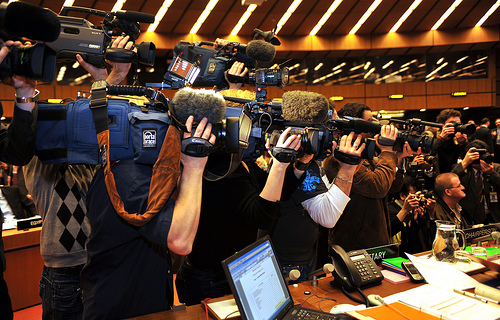
Multiple Microphones Drawing medium_5538036046

I first started doing media training as part of a team at the PR firm that brought me to Nashville. Over the years, through agencies and my own consulting business, I’ve done training for people in a variety of industries and with a range of skills and experience in doing interviews.

I’ve come to believe that everyone can benefit from media training, and that it will improve their communication skills, though it will be more helpful for some than others, depending on their experience and natural abilities in dealing with reporters.

Ad agency principals who serve as spokesperson for their agency would be wise to consider media training to help them learn how to take control of an interview, handle sticky questions and get their key points across.

Here are some common challenges for inexperienced spokespeople:

  • Going off message
  • Inability to clearly articulate core messages
  • Being combative
  • Rambling
  • Fidgeting or other distracting body language
  • Freezing up when the camera light comes on
  • Giving out inaccurate or misleading information
  • Falling into interview traps

 One of the most important points I make in my training is this: When you’ve made your point, stop talking.

That’s because more times than not people make their best points in the first sentence or two they utter in response to a question. When they elaborate too much and get “off message,” it’s not uncommon for them to end up in the swamp and say something they later regret.

With some basic training, the right messaging and a little practice responding to challenging questions, your agency will be prepared to tell its story with clarity and confidence.

photo credit: opensourceway via photopin cc


Eight Essential Tools for Ad Agency PR

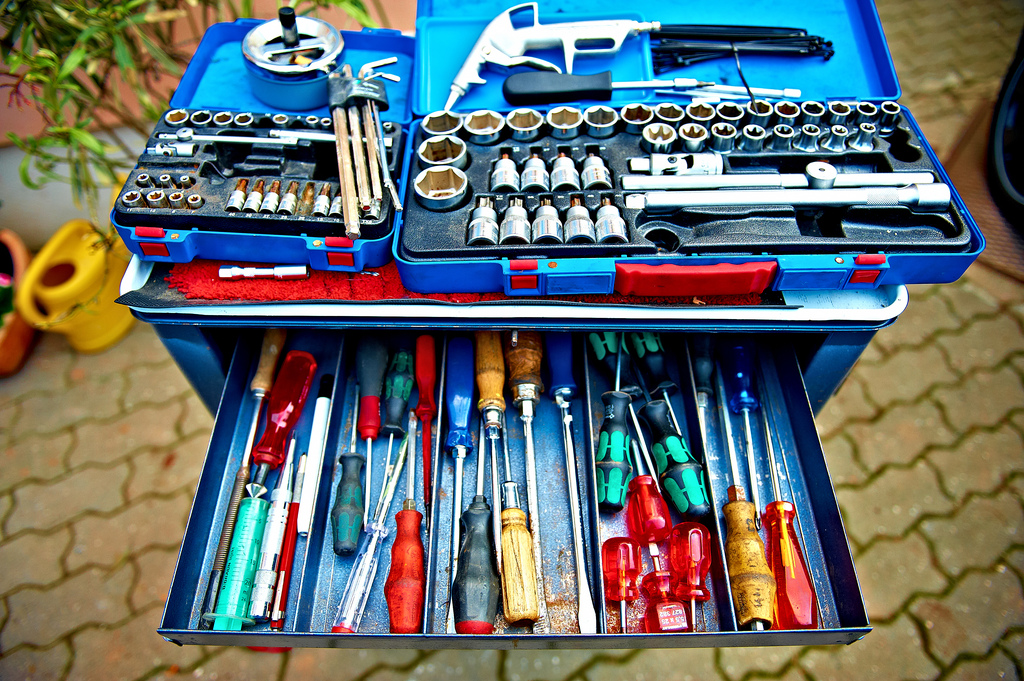
Photo of an open toolboxA strategic ad agency PR plan that compliments new business initiatives with a clear focus, target and purpose can be a powerful way to get discovered by prospects and drive sales. Here are eight must-have tools, many of which are free, that will help you get the most out of your agency’s PR activities:

The Associated Press Stylebook

The Associate Press (AP) Stylebook is a handbook used by journalists and PR professionals throughout the world as a guide for writing style, grammar, spelling and punctuation. Follow AP style in your news releases and other media materials, and you’ll gain some instant credibility with reporters and editors.

Media Directories

Sure, you can do an Internet search to track down news media people, but a good media directory is worth its weight in gold. Cision Global Media Database and Bulldog Reporter’s MediaPro Database are two of the best. Cision has 1.6 million records, with editorial calendars and media databases of print, broadcast, Internet news sites, social networking sites, bloggers and news bureaus. While that information alone will save you a lot of time, the greatest value for me is the “contact notes” section, which offers insights into what a particular reporter wants, and how and when he/she prefers to be contacted. Here’s a sample entry from a computer/high tech reporter for USA Today:

  • “Works from home, but prefers all materials be sent to the paper.”
  • “Prefers to be contacted by e-mail and hates follow up calls.”
  • “She is interested in the ideas behind technology, not the products.”

Some contact notes might say something like, “Do not call Tuesdays afternoons as he is on deadline.” If you don’t know that and you call him Tuesday afternoon, and he happens to answer the phone, you’re going to be off to a bad start before you say a word.

Headline Analyzer

The free CoSchedule blog post headline analyzer scores your headline on its length, structure, grammar and readability.

Emotional Marketing Value Headline Analyzer

If you want to see how well your headline connects emotionally, the Emotional Marketing Value Headline Analyzer will give you a score ranking from 1 to 100. The higher the score, the better your headline. The headline analyzer will also tell you which emotion – intellectual, empathetic or spiritual – is most impacted in a reader’s mind.

Press Release Grader

PRWeb’s Press Releases Grader is a free service that evaluates releases and gives instant feedback on how to improve them so they are more visible to search engines, more engaging and do a better job of driving traffic to your site.

Help A Reporter Out (HARO)

HARO is a newsletter that is e-mailed daily to subscribers with leads from reporters seeking sources for stories. The leads are organized into categories (Business & Finance, Health/Fitness, Lifestyle, Technology, etc.) with specifics about each story, what information the reporter is seeking and contact information.

RadioGuestList

RadioGuestList matches guests with expertise on particular topics with the hosts who want to interview them. Radio talk show, podcast, online radio show, satellite radio and TV program bookers and producers use it to discover new interview guests.

BloggerLinkUp

BloggerLinkUp connects bloggers looking for help with guest posts with people who are looking to get links and exposure by writing guest posts. There also are opportunities to have products reviewed by bloggers and to get in touch with bloggers who do interviews and need sources for stories.

HARO, RadioGuestList and BloggerLinkUp are FREE, and they bring daily leads to your inbox.

photo credit: Order Of Battle via photopin (license)

2015 Fuel Lines New Business Conference Was Loaded with Helpful Ideas and Insights

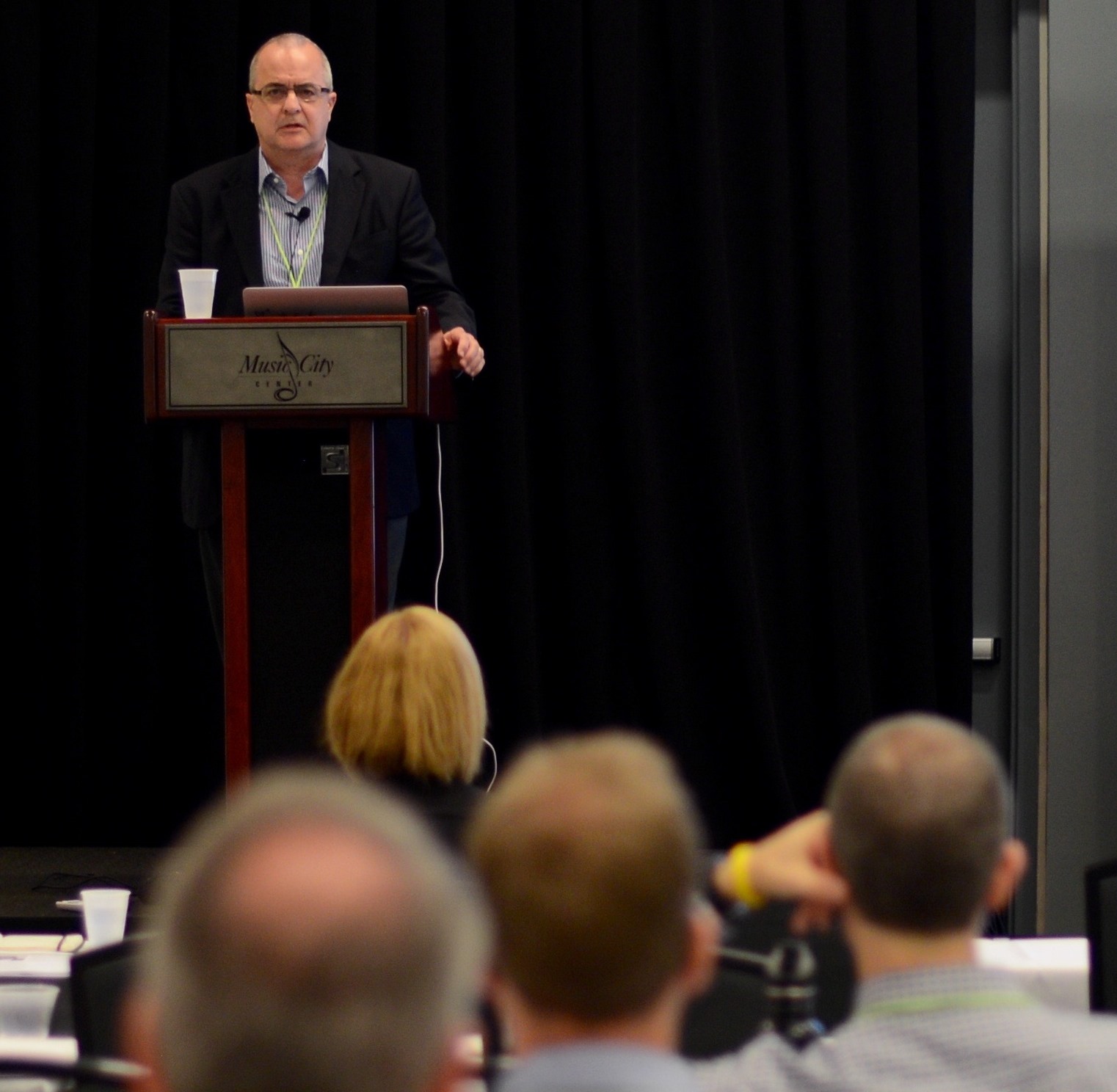
Michael Gass speaking at the conference

Michael Gass organized the inaugural Fuel Lines New Business Conference in Nashville

I’m still unpacking all I heard at last week’s inaugural Fuel Lines New Business Conference for advertising, digital, media and PR agencies. The conference, which drew people from more than 60 cities—including a few from outside the U.S.—was held at Nashville’s snazzy new Music City Center. It was organized by my friend and colleague Michael Gass.

Because there were concurrent breakout sessions, it wasn’t possible to attend everything over the two-day period. But, I learned plenty from the sessions I was able to make. Here are 10 observations that struck me as particularly noteworthy from some of the thought leaders who spoke (though they only scratch the surface):

  • Nothing is more powerful than a human insight (Peter Levitan)
  • Chemistry is the key factor in new business presentations (Peter Levitan)
  • Create personas of prospective clients to prepare customized new business presentations (Bob Sanders)
  • We have grossly exaggerated the importance of brands to consumers; most of what we call brand loyalty comes from habit and convenience (Bob Hoffman)
  • The key factors for international agency business are trust, proximity, special skills/expertise, process and global reach (Julian Boulding)
  • Don’t be afraid to specialize in what you do best (Stephanie Holland)
  • Write RFPs with simple words and phrases, and eliminate unnecessary words; a confused mind always say no (Jody Sutter)
  • Give RFP prospects something extra of value (Jody Sutter)
  • Pick a niche and own it; don’t be afraid to say no to opportunities outside your niche (John Sonnhalter)
  • Positioning is foundational for new business; an agency should have a specific target and strong point of differentiation (Michael Gass)

In my breakout session, “How to Craft an Agency PR plan that Drives New Business,” I discussed the building blocks of creating a performance-based public relations plan for one’s agency. I also explained how the strategic use of PR can enhance awareness and credibility; distinguish an agency from competitors; and make it easier for agencies to be found by decision makers.

Don Beehler speaking at the conference

Speaking about ad agency PR at the Fuel Lines New Biz Conference

My three most important points:

  • Consistency is vital for successful agency PR
  • Becoming a trusted source is the quickest way to increase awareness and gain credibility
  • A successful PR plan is strategic with a clear focus, target and purpose

I sure hope Michael will have a second annual conference next year. This not only was a great learning and networking experience, but also a lot of fun.

PR Implications for the Growing Trend of Automation in Newsrooms

Close up of robot head

If you thought it was tough selling a story idea to a skeptical reporter, try making your next pitch to a heartless, steely-eyed robot journalist.

In a March 2014 Wired article titled, “Robots have mastered news writing. Goodbye journalism,” a study involving undergraduate students found a generative software news article held its own with one written by a real-life journalist. In fact, the automated story scored higher in areas such as trustworthy, objective and more accurate.

This obviously is not good news to the human reporters who have managed to survive the deep cuts made in recent years, particularly at newspapers.

“…when it comes to implication for the future of journalism we should keep in mind that the algorithms are getting better and better” says Christer Clerwall, assistant professor of media and communications at Karlstad University in Sweden.

He’s the guy who had students make the comparison. While not exactly a scientific study, it is interesting to consider the possibilities and implications of the growing trend toward automation in the newsroom.

  • Recently The Associated Press hired an automation editor, and a number of newsrooms are now using algorithms to help them with stories. Automating certain aspects of reporting is supposed to reduce the workload of reporters – AP estimates it saves 20% of the business desk’s time – and it provides them with new data resources, which in theory help human reporters do a better job of identifying and telling important stories.

As is the case with other industries, automation in the newsroom also means fewer human employees are needed. In fact, journalism is one of the nine professions singled out as being in jeopardy by the rising use of robots.

But loss of jobs isn’t the only concern. Automation “is raising new questions about what it means to encode news judgment in algorithms, how to customize stories to target specific audiences without making ethical missteps, and how to communicate these new efforts to audiences,” according to a Sept. 1, 2015, article about automation in the newsroom by NiemanReports.

The author, Celeste LeCompte, points out one benefit of automation is that it can actually help connect audiences more directly: “In June, journalists at Oregon Public Broadcasting (OPB) rolled out a news app to accompany a series on earthquake preparedness in the state. The app, called Aftershock, provides a personalized report about the likely impacts of a 9.0 magnitude earthquake on any user’s location within the state, based on a combination of data sets.” That’s really getting local and personal.

Training the automated software brings challenges of its own, such as providing appropriate guidance in which metrics and data are most important for a particular story, and learning to navigate through a panoply of variables. (Think of the data and variables involved in GPS giving the quickest route from point A to B.)

At least one person in the comments section of the NiemanReports’ article was not impressed, writing, “Big deal. A vast majority of journalists were programmed by the left long ago.”

What are the implications for public relations professionals? Some of this could actually work in our favor. For example, I’ve seen reporters either refuse to do stories or do terribly one-sided coverage because of what I suspected was their personal bias on the subject matter. No such problem when dealing with a machine, unless bias is programmed into it.

Another benefit is that we wouldn’t have to be concerned about dealing with the occasional reporter with an enormous ego or one who is emotionally fragile and unloads on people when they call at the wrong time. If a story is a “logical” fit, pitching it to an objective robot could be a real plus.

Of course, if the robots get fed up enough with PR pitches, they may resort to their own automation: “To submit a story idea, press 1 and record at the beep; to share a news tip in 30 seconds or less, press 2; to request a correction, press 3….”

photo credit: Corpo Automi Robot via photopin (license)

New Social Journalism Study & What It Means for Ad Agency PR

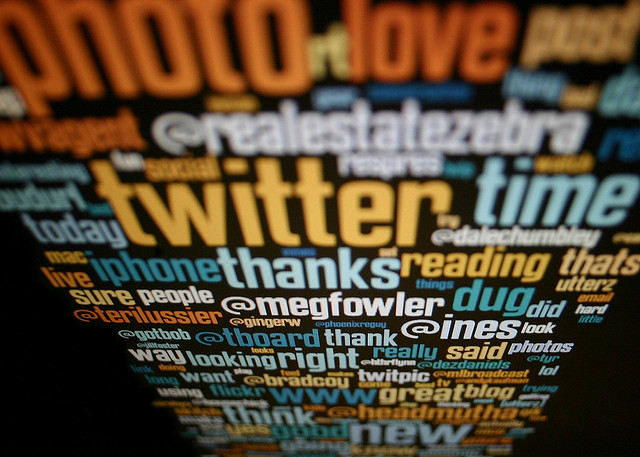
Twitter with tweets

A new Social Journalism Study by Cision and Canterbury Christ Church University found that social media has become an essential part of journalistic practice, with 94% of respondents saying they use it on a daily basis.

“Four years ago, a majority of journalists were hesitant to utilize Twitter and Facebook, and seemed especially skeptical about how these sites could help them reach audiences near and far. But now, we see a shift towards journalists relying on the networks to get their jobs done,” Cision noted in its introduction to the study.

The three findings I found with the most significant implications for ad agency PR were:

  1. Twitter is the most popular social media app. About three-quarters of journalists in the U.K. and U.S. said they use Twitter on a regular basis, so if you want to connect with a reporter via social media in those countries, Twitter is your best bet.
  1. Email is how most journalists prefer to be contacted. A little over 80% listed email as their first choice. For U.S. journalists, social media is their second choice, while in four of the other five countries surveyed—Finland, Germany, the U.K. and Australia—phone calls came in at #2. For now, at least, U.S. journalists seem to be the most concerned about being interrupted by calls when on deadline, or in general do not really like having to listen to pitches over the phone all that much.
  1. Experts are a key source of information for journalists. No big surprise here really, but nevertheless this study confirms that one of the main reasons journalists use social media is to find sources and network. In the U.S., experts were cited as the most important source of information (40%) over PR sources (36%).

There also is this interesting trend prediction from the study: “Journalists will continue to rely on experts so they do not compromise their values and views of their profession by sourcing from perceived unreliable sources.”

For ad agencies, the implication is clear: Having a niche, building your reputation as an expert in that niche and making your agency “discoverable” is more important than ever, and it will continue to be in the foreseeable future.

photo credit: JefferyTurner via photopin cc

Study Finds Bloggers More Trusted Than Journalists

Computer keyboard

As I have noted in previous posts, agency blogs can be a very effective way to build one’s reputation as a subject matter expert in a particular niche. However, lack of focus, purpose and/or providing content that does not resonate with the target audience more often than not is a waste of everyone’s time.

If done well and strategically, blogs be can incredible tools for ad agencies and other entities to generate awareness, credibility, influence and a loyal following—all of which enhance new business endeavors.

Now there’s a new study that provides further evidence of the power of blogging.

An independent UK survey of consumers by affilinet found that bloggers have more influence than journalists, celebrities, politicians or brands, coming in third place behind family and friends.

Bloggers who cover a specialized area fared particularly well among those surveyed.

“What is encouraging…is the role that bloggers and social media play within consumer trust,” said Helen Southgate, UK managing director of affilinet. “Working with niche specialist bloggers using adverts or content tailored to their audience, will become an important part of the acquisition strategy for advertisers, [as] they strive to improve the level of trust in their brand from consumers.”

According to a press release about the study issued by affilinet, “Consumers were asked whether they trusted the opinions of mainstream media outlets (magazines, newspapers, and online titles tied to a publisher), or independent bloggers/vloggers more, when it came to purchasing decisions, and the bloggers came out on top; 57% vs 43%.”

While the study is UK-specific, it’s clear that consumers there are increasing turning to niche bloggers for what they consider to be credible, trustworthy and reliable information.

That is consistent with Technorati’s 2013 Digital Influence Report, which found that blogs rank high when it comes to trust and influence: “When making overall purchase decisions, for consumers, blogs trail only behind retail and brand sites. With regard to overall sources for information on the internet, blogs rank among the top five ‘most trustworthy’ sources.” 

(If you don’t have time to read the full report, Social Media Examiner’s Patricia Redsicker has a good overview of its findings.)

Whether your blog is designed to reach consumers, businesses or other audiences, having a niche with fresh insights, useful tips and compelling content will bring value to your readers and success to your organization.

photo credit: Macbook Air 2012 via photopin (license)

Nashville Conference Will Focus on New Drivers of Agency Business Development

Photo of Nashville Convention CenterIf you’re looking for growth strategies for your agency, be sure to check out the Fuel Lines New Business Conference 2015 in Nashville, Tennessee, October 8-9.

The conference is designed for agency principals and their management, new business and senior account management teams. Attendees will learn from new business thought leaders with a laser focus on the new drivers of business development.

“New business has been a problem historically for agencies. It’s made worse with the paradigm shift in business development. The primary battle for new business has moved online. It’s now more important to be FOUND than to CHASE new business,” noted Michael Gass, founder and president of Fuel Lines Business Development.

And that, in a nutshell, is why this conference is so important: It will help you make your agency more easily discovered by key influencers and decision makers.

I’ll be leading the October 8 breakout session titled “How to Craft an Agency PR Plan That Drives New Business.” In my guest post on the Fuel Lines blog, I discuss what I believe is the key to using PR to drive agency leads and three planning steps to help maximize PR for new business.

The conference has early registration discounts and is limited to the first 200 registrants. Super early registration ends June 15. Visit here for more information or to register.

Ad Agencies: Make Sure Your Clients Are Prepared for the Unexpected

Multiple camerasFrom a political donation scandal involving a top news media personality to a deadly gang   shootout at a restaurant in Waco, Texas, the past few days have been a somber reminder that a crisis can strike at any time.

In what is described as a “nightmare” on the Drudge Report and a “crisis” by the New York Post, ABC News is grappling with revelations that “Good Morning America” and “This Week” anchor George Stephanopoulos failed to reveal to the network and to viewers large contributions he made in 2013 and 2014 to the Clinton Foundation, raising questions about his objectivity and credibility. He has apologized, but the damage is done.

Mr. Stephanopoulos, whose contract with ABC News reportedly is worth $105 million, previously worked in President Clinton’s administration, but then a lot of news commentators have had previous involvement in campaigns and administrations (which is why their insights are valued).

But once employed by a news agency–especially at two such a high-profile positions—he had an ethical responsibility to go beyond what is a matter of public record when it came to disclosing his donations to the Clinton Foundation.

Mr. Stephanopoulos’ objectivity has been questioned before, and now it will really be under fire.

According to a Post article by Emily Smith, one source put it this way: “George is the centerpiece of their 2016 coverage. By donating to the Clintons, he has blown his credibility in one catastrophic move.”

Far from the East Coast another crisis flared in a seemingly unlikely place: The Twin Peaks restaurant in Waco, where a brawl broke out among rival biker gangs, leaving nine dead and 18 injured.

According to a Wall Street Journal article, a Twin Peaks spokesman said the company was “revoking the franchise agreement for the Waco location.”

Jay Patel, the local operating partner of the franchise, apparently was being abandoned by Twin Peaks. What he did to get his franchise agreement revoked is not clear. Most likely he’s in a state of shock, which may explain why he reportedly did not respond to “repeated requests for comment.”

What lessons can be learned from these two unfortunate situations?

First, both incidents should have been anticipated. While it’s true that Twin Peaks wouldn’t necessarily foresee a fight of this magnitude breaking out at one of the restaurants, it is not at all unlikely that fights or other disruptive activities could take place. Rather than stand by the Waco franchise owner, and provide support to him and others at the local level, the spokesman basically threw Mr. Patel under the bus in an apparent effort to disassociate the company from this tragedy as quickly as possible. What message does this send to other franchise owners?

As for ABC News, it would have been prudent to ask Mr. Stephanopoulos to disclose potential conflicts, such as political donations, before renewing his contract last year. Then again, maybe the network did ask him that very question and he assured him there were none, in which case ABC News would seem to have a valid reason to break his contract if it so choses.

Second, an effective crisis plan would have helped ABC News and Twin Peaks better navigate through these very difficult situations. An effective crisis plan contemplates the types of crises that could occur, and it helps companies and individuals deal with the unexpected by providing a roadmap of “if this happens, then we say/do this.”

Specific situations and details will vary, but certain core issues that involve ethics, integrity, safety, etc., can be addressed beforehand through the filter of the core values an organization holds. Those values then form the basis for polities, strategies and key messages that are prepared in advance and which can be tailored to a particular crisis. Maybe one or both companies have crisis management plans, but if so they don’t seem to be very effective.

Third, while I doubt that Mr. Stephanopoulos needs media training, it sure would have come in handy for Mr. Patel. As a franchise owner, it’s certainly not improbable that something could happen at his restaurant that would draw media attention. Ignoring inquiries from reporters is just not a good strategy.

One of the most important things an ad agency can do in a crisis situation is to help its client see the reality of the situation and what needs to be done. It’s easy to panic and develop a siege mentality when an organization in crisis is under intense scrutiny from the outside, but that only makes matters worse.

Properly managing the crisis is vital, because facts alone don’t win in the court of public opinion—perceptions do.

Having said all this, I realize it is very easy to play Monday morning quarterback, and it’s likely there are additional facts that are unknown at this time which may be driving how the companies are handling these situations. I’ve also been on the crisis management side, and it can be frustrating and stressful. Having a solid plan in place can be a game changer.

Being prepared by planning for the worst ahead of time and having a crisis communications strategy in place can make a big difference in how a company or client comes across in a crisis—especially in the early stages. And that in turn can affect the organization’s credibility and reputation for month or even years.

photo credit: 01610210 via photopin (license)

Additional PR Lessons from a Baseball Manager’s Meltdown

Photo of a baseballA lot has already been written about the way Cincinnati Reds Manager Bryan Price recently lost his cool (to put it mildly) in a pre-game conversation with reporters.

Writing in PR Daily, Aaron Endré offered “4 PR lessons from a baseball manager’s meltdown.”

His tips for talking with reporters are summarized as follows:

  1. Speak as if everything you say will be printed.
  2. Clarify which statements are “on the record.”
  3. Agree on when the news can go live.
  4. Keep calm.

I agree with all of them, but in the context of Mr. Price’s incident I’d like to add three more suggestions:

5. Take a deep breath and pause before responding when you’re upset.

Responding in anger is never a good idea. Take a moment to cool down—no matter how provocative a question you may have been asked or how upset you are—and think through a measured, appropriate answer.

The #1 point I stress in my media training seminars is this: When you’ve made your point, stop talking. Why? Because you usually make your best points in the initial response to a question. A skilled reporter may nod as a signal to keep you talking, but it’s prudent to resist the urge to do so or you may end up going down the swamp by saying more than you intended. The more you talk, the greater the opportunity to say something you’ll regret later on. So think before you speak, and when you speak be concise and to the point.

6. Learn and use good manners.

Common courtesy and civility seem to be in increasingly short supply these day. The issue here, for me at least, is not so much that Mr. Price got caught on tape with this profane rant, but that he made the rant in the first place. This guy must have some significant anger issues, but it’s still no excuse to behave like that. Self-control is something we should have learned in elementary school, but it’s better to learn it late than never.

7. Remember that it’s not just about you.

Maybe Mr. Price felt better after verbally attacking the reporter who upset him, but what sort of example did his behavior set for the many kids who have now been exposed to it? Whether they want to be or not, athletes and coaches are role models to score of young people who look up to them and imitate their behavior. What sort of message is he sending to them? Certainly not a very positive one.

photo credit: Opening Day 2007 – Astros via photopin (license)

15 Questions Ad Agencies Should Ask Before Engaging PR Services

Conference room photo

For many small- to medium-sized ad agencies, public relations can be a mystery.

Ad agency principals are experts when it comes to strategy, branding, creative and messaging, but dealing with reporters can be intimidating if one doesn’t fully understand how public relations works and the “magic” used to generate publicity and goodwill for clients or an agency.

It’s not unusual for ad agencies or their clients to say they want to use PR because “no one knows us outside out of (city, region, industry).” They want to increase awareness.

If I were to ask why they want to gain awareness, they may very well look at me and say, “Well duh, we want more people to know about us so that we’ll grow and make more money.”

Fair enough. But if I ask how PR is integrated into their new business plan, more likely than not I’ll get blank stares.

Yet increasingly, decision makers are finding vendors rather than the other way around, which make PR more important than ever for new business success.

Instead of chasing new business through cold calls, which has very limited effectiveness these days, agencies need to use PR strategically to help them be discovered by decision makers.

Here are 15 questions to help your agency get started on the road to PR success.

These questions are designed to assist you in assessing your situation, your highest priorities and needs, and what you really want to accomplish through public relations.

Once you and your team have thought through and answered these questions, you will be much better prepared to have a productive conversation with a PR person or PR agency:

  1. What is the desired result from PR (e.g. increase awareness, change perception, be positioned as an expert in a particular niche, generate new business or something else)?
  2.  How would you rate your agency’s PR capabilities on a scale from 1-10, with 10 being the best and 1 the worst?
  3. How would you rate your agency’s new business focus on a scale from 1-10, where 10 is perfectly targeted and 1 is we’re all over the map?
  4. Are you looking for PR help with your agency, to offer it as a service to clients, or both?
  5. What is the primary way you use or would like to use PR in your agency: Agency promotion, new business development, provide as a service to clients or enhance integrated marketing communications capabilities?
  6. How effective were your past PR efforts (assuming you had some)?
  7. What PR opportunities can you identify that have not been maximized?
  8. How would you describe your agency’s positioning/branding?
  9. How would you define your target audience for new business?
  10. How should PR integrate into your new business strategy?
  11. How does social media fit with your new business strategy and PR?
  12. Where would you like to obtain publicity (i.e. target publications, bloggers, radio/TV programs)?
  13. What speaking events would you like to be invited to participate in, and how can PR help with that?
  14. How will you define PR success?
  15. How will you measure that success?

photo credit: timailius via photopin cc